How to Clean a Sofa Without Ruining the Fabric
A sofa can be the most beautiful piece in your living room and still make the whole space feel tired. When the fabric starts looking dull, holding onto odors, or showing a few obvious stains, the room loses that fresh, cared-for feeling. The problem is that many people try to fix it too quickly with too much water, the wrong cleaner, or hard scrubbing, and that is usually what causes fading, water marks, or flattened texture.
If you want your living room to feel clean, soft, and pulled together again, the goal is not to aggressively deep-clean your couch. The goal is to clean it in a way that protects the color, texture, and comfort that made you love it in the first place.
That is where the Clean Without Collapse Method comes in:
Check the fabric, loosen the buildup, treat the spot, and dry with control.
It is a simple method, but it works because it prevents the most common sofa-cleaning mistakes before they happen.
The Clean Without Collapse Method
A sofa is not just another surface to wipe down. It is one of the largest soft furnishings in the room, and it often acts as the visual anchor of the entire living area. That means cleaning it the wrong way does not just damage the fabric. It changes how the whole room looks.
Here is the order that works best.
1. Check the fabric first

Before you do anything, find the care tag on your sofa. Most upholstered furniture includes a cleaning code that tells you how the fabric should be treated.
If you skip this step, even a gentle-looking cleaner can leave water rings on linen, streaks on microfiber, or crushed texture on velvet. A clean sofa should still look like itself afterward.
2. Loosen buildup before treating stains
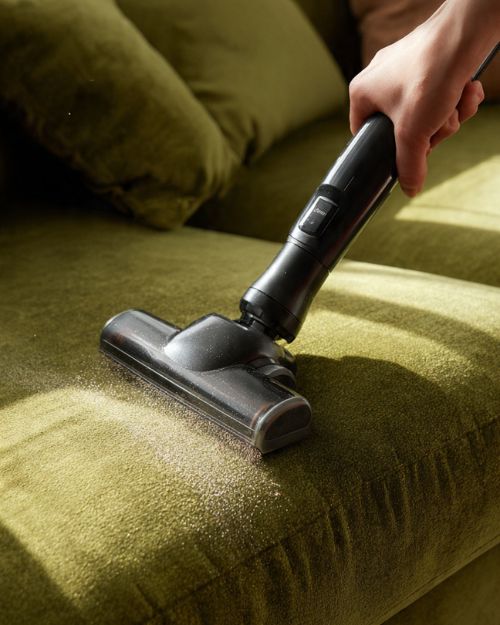
Always vacuum the sofa before using any cleaner. Dust, crumbs, pet hair, and fine debris settle into the fabric more than most people realize. If you start rubbing a stain without removing that buildup first, you can push dirt deeper into the fibers and make the area look worse.
3. Treat the exact problem
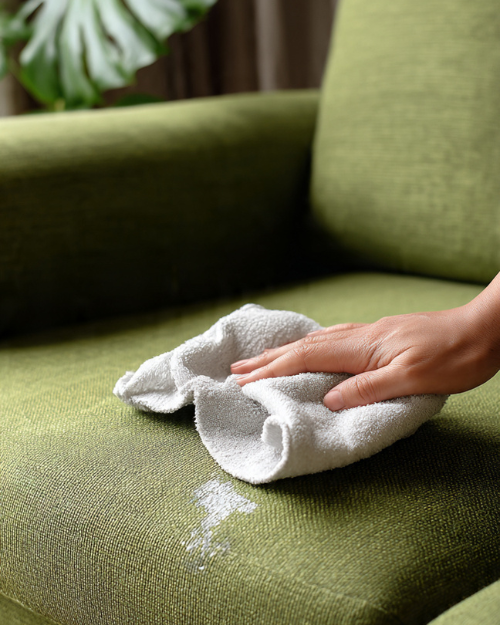
One of the biggest mistakes people make is over-cleaning the whole sofa because of one stain or one dull patch. In most cases, a targeted clean gives a better result than soaking a large section of fabric.
4. Dry with control
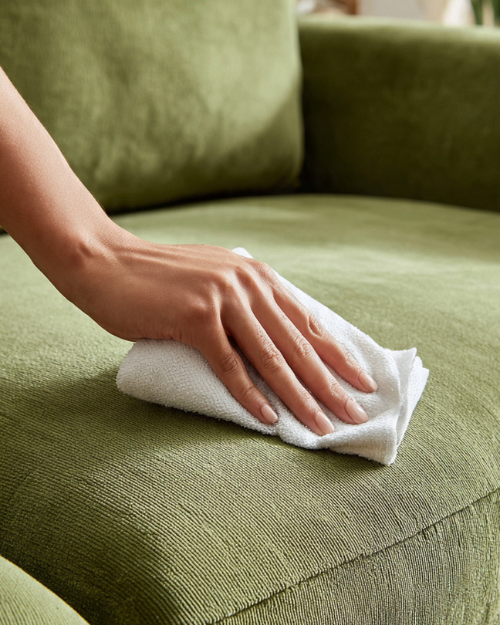
Many sofa-cleaning disasters happen during drying, not washing. If the fabric stays wet too long or dries unevenly, you can end up with rings, stiffness, or a slightly musty smell. The best results come from light moisture, gentle blotting, and steady airflow.
How to Clean a Sofa Step by Step
Vacuum the entire sofa
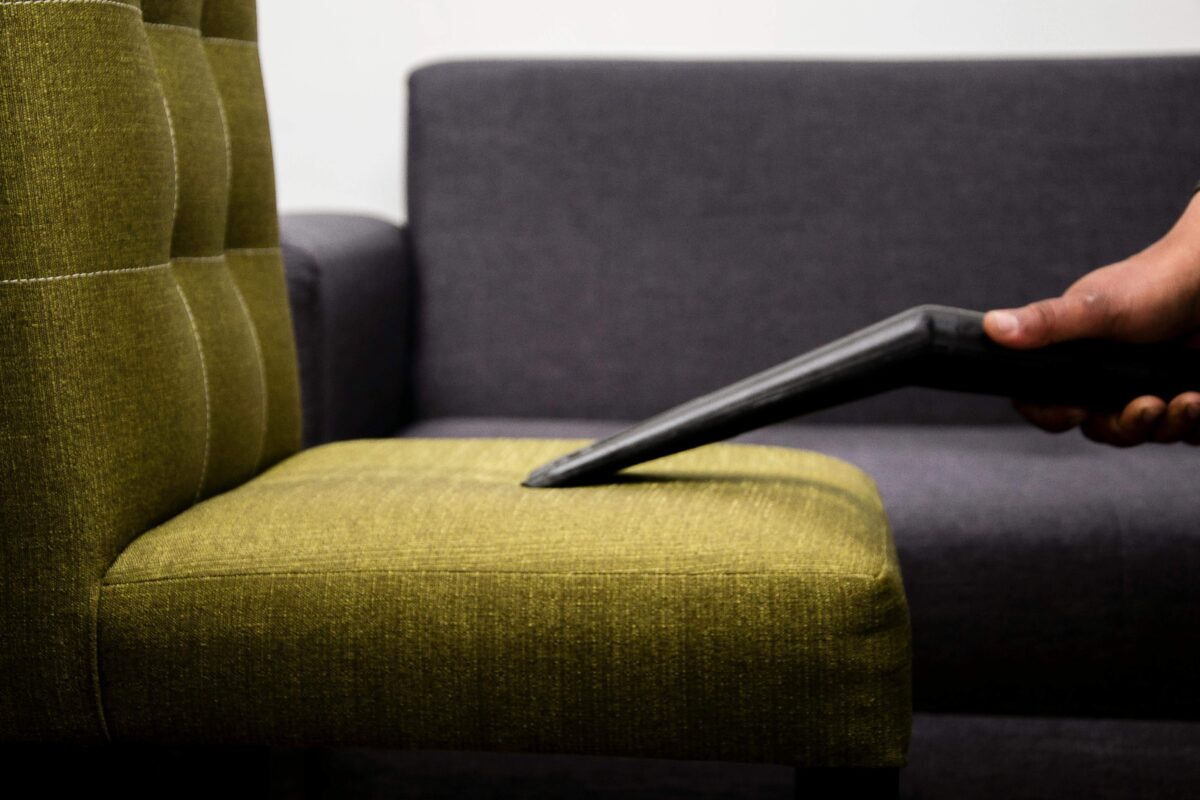
Start by vacuuming the full surface using an upholstery attachment or a soft brush tool. Go over the seat, arms, back, seams, and under the cushions. Even if the sofa does not look dirty, this step matters.
A couch often looks fresher simply because the surface dust is gone and the fabric texture is lifted again.
Spot test in a hidden area
Before using any cleaner, test it on a hidden section of the sofa. Under a cushion or near the back edge works well. This one habit can save you from discoloration, shrinkage, or a cleaner that dries darker than expected.
Use a small amount of moisture
Never pour cleaner directly onto the sofa. Dampen a clean microfiber cloth instead and blot the fabric gently. The fabric should feel lightly treated, not soaked.
This is especially important on light-colored sofas, where one over-wet patch can create a stain that looks worse than the original problem.
Blot instead of scrub
Blot from the outside of the stain inward. This helps contain the stain and prevents it from spreading into a larger area. Scrubbing may seem more effective in the moment, but it can rough up the fibers and leave one patch looking worn.
Let the fabric dry fully
After cleaning, leave the sofa uncovered and allow air to move through the room. Open windows if possible or use a fan nearby. Do not put cushions back too quickly, and do not throw blankets over damp fabric.
A sofa that dries evenly almost always looks better than one that dries slowly under layers.
Real Room Scenarios
If your sofa looks dull but not actually dirty
This is common in living rooms that get daily use. The fabric may not have obvious stains, but it can still look flat because of dust, body oil, and compressed texture.
In this case, the best approach is:
- vacuum thoroughly
- lightly refresh any high-contact areas
- rotate and fluff cushions
- let the fabric breathe
A sofa often starts to look expensive again when the texture returns, not just when the stains disappear.
If your cream or beige couch has one visible stain
Do not clean the entire seat just because one area is marked. That is how people end up with a large damp patch that dries into a watermark.
Treat only the affected area first. Blend the edges gently and dry it evenly. Too much effort is often what makes a small stain more noticeable.
If your sofa smells slightly off
Sometimes a couch is not visibly dirty, but it still makes the room feel stale. This usually happens in family rooms, apartments, or homes with pets, where the upholstery slowly absorbs cooking smells, body oils, and general daily life.
Start with a full vacuum, then use a fabric-safe deodorizing method suited to your sofa type. Follow with good airflow. Rooms feel more polished when soft furnishings smell neutral and clean rather than heavily perfumed.
Best Cleaning Approach by Fabric Type
Linen
Linen sofas look relaxed and elegant, but they can show moisture marks easily. Use very light cleaning methods and avoid over-wetting any one spot. The goal is to refresh the fabric without creating a darker ring around the treated area.
Velvet
Velvet needs a gentle hand. Strong rubbing can flatten the pile and leave one patch looking darker or shinier than the rest. Clean carefully, use minimal moisture, and restore the texture gently once dry if the fabric allows it.
Microfiber
Microfiber is often forgiving, but it can become streaky if too much liquid is used. Controlled spot cleaning works best. Once the fabric is dry, a soft brush can help lift the texture back into place.
Cotton blends
Cotton-blend upholstery usually responds well to light spot cleaning, but it still benefits from a patch test and a gentle approach. It is easy to assume a sturdy-looking fabric can take more than it should.
Common Sofa Cleaning Mistakes to Avoid
Using too much water
This is the fastest way to create water marks, slow drying, and trapped odor.
Scrubbing too hard
A stain might fade, but the fabric can end up rougher, lighter, or more worn than the surrounding area.
Skipping the vacuum step
Cleaning over dust creates muddy fabric, not fresh fabric.
Using a strong all-purpose cleaner
Just because a cleaner works on hard surfaces does not mean it belongs on upholstery. Sofas need fabric-safe care.
Drying unevenly
An uneven dry can leave the cleaned section standing out in all the wrong ways.
Who This Method Works Best For
This approach works especially well for:
- light-colored sofas
- family living rooms
- apartments where the couch is the focal point
- renters trying to make furniture last longer
- homes with pets or frequent daily use
It is also ideal for anyone who wants a home that feels clean and styled without making sofa care feel like a huge project.
How to Clean a Sofa on a Budget
You do not need a machine or a professional service every time your couch needs attention. In many homes, the best budget strategy is consistency.
A simple routine looks like this:
- Vacuum weekly or every other week
- Treat stains quickly
- Rotate and fluff cushions often
- Use light, fabric-safe spot cleaning only when needed
- Air out the room regularly
A well-maintained sofa nearly always looks better than one that is ignored until it needs rescuing.
What to Avoid in Small or Low-Light Rooms
Small living rooms make every visual detail stand out more. That means a stained sofa, a dark, damp patch, or fabric that dries stiff can change the whole mood of the room.
If your room is small or gets limited natural light, avoid:
- Over-wetting large sections
- Cleaning late in the day without airflow
- Putting throws or pillows back too soon
- Using heavy products that leave residue or a strong scent
A small room feels calmer when the upholstery looks soft, even, and settled rather than freshly scrubbed.
A Styling Observation Worth Remembering
A sofa does not need to look brand new to make a room feel beautiful. It needs to look clean, soft, and well-kept.
Rooms often feel more elevated when the palette is calm, and the textures are fresh. That is why careful sofa cleaning matters more than harsh cleaning. You are not trying to strip the life out of the fabric. You are trying to bring back its comfort, color, and presence.
Too much cleaning can make a sofa look tired in a different way. A gentle method protects the character of the piece.
Final Thoughts
If your living room feels slightly flat, your sofa may be the first place to look. When the upholstery is dusty, dull, or holding onto old odors, the whole room feels less fresh. But cleaning it properly can shift the space more than buying a new throw pillow or rearranging accessories.
The key is to follow the Clean Without Collapse Method:
Check the fabric, loosen the buildup, treat the spot, and dry with control.
That is how you clean a sofa without ruining the fabric and without losing the softness and beauty that made it the center of your living room in the first place.