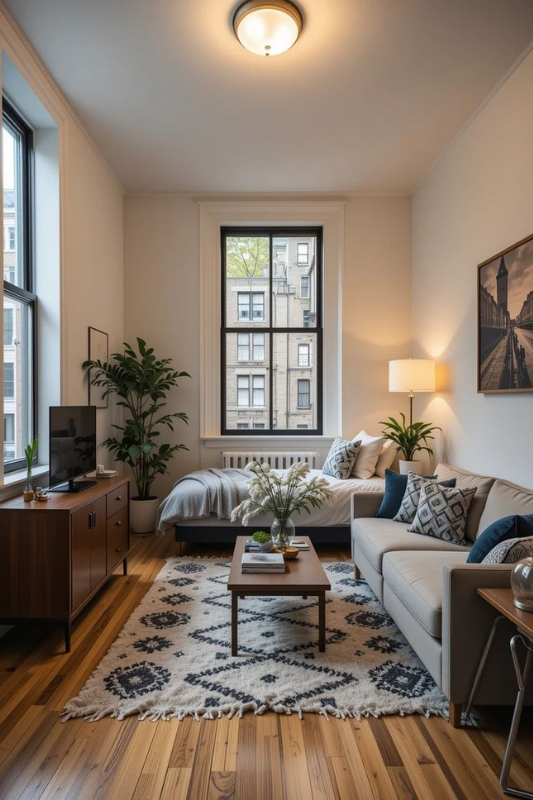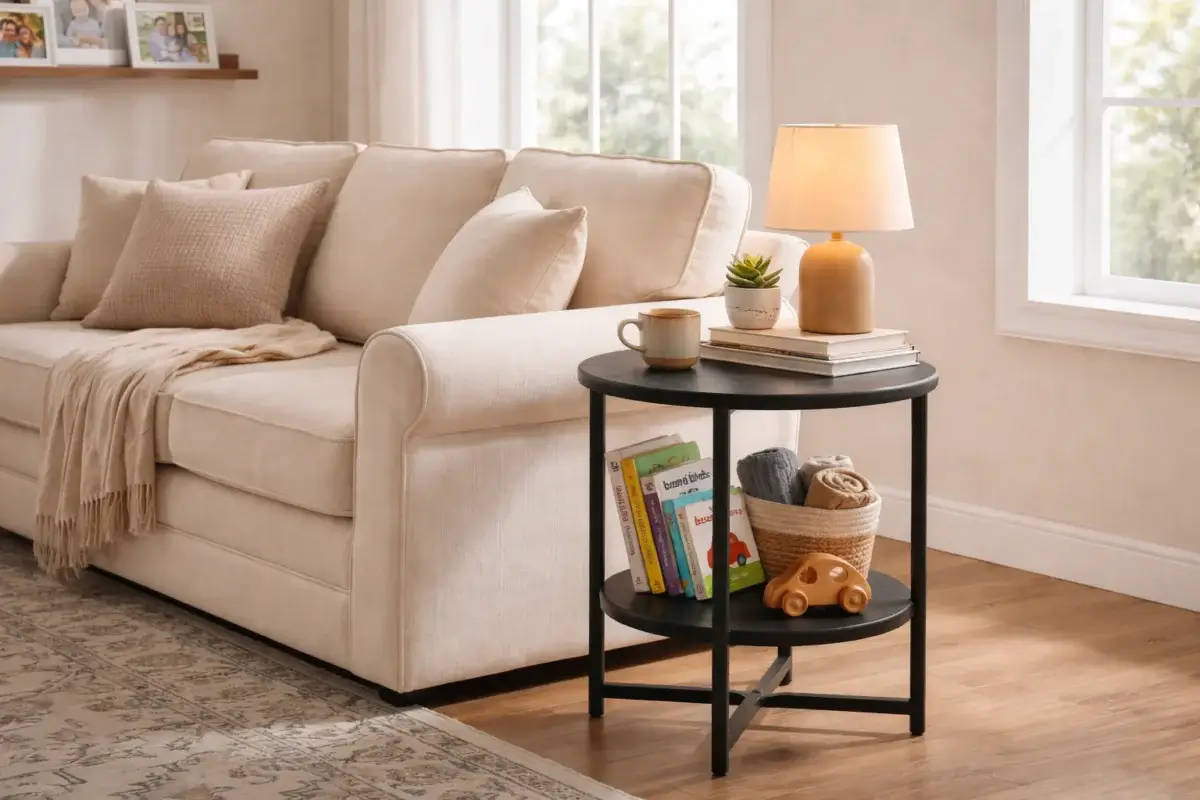
End table decor is one of those details that quietly decides whether a living room feels finished or forgotten. You can have a great sofa, beautiful rugs, and perfect lighting, but if your end tables are cluttered, empty, or awkwardly styled, the room won’t quite work.
The good news is that styling an end table doesn’t require expensive decor or a designer’s eye. It comes down to a few repeatable rules that professionals use in almost every home. Once you understand them, you can style any end table with confidence and adjust it easily over time.
Always Start With Function
Before you think about decor, decide what your end table needs to do.
Most end tables serve at least one purpose:
Hold a lamp for task or ambient lighting
Provide a place for a drink, phone, or book
Store everyday items like remotes or glasses
If your decor interferes with those uses, the table will feel frustrating instead of stylish. Always leave a small, clear area on the surface. Function should guide the styling, not compete with it.
The Designer Formula That Works in Any Home
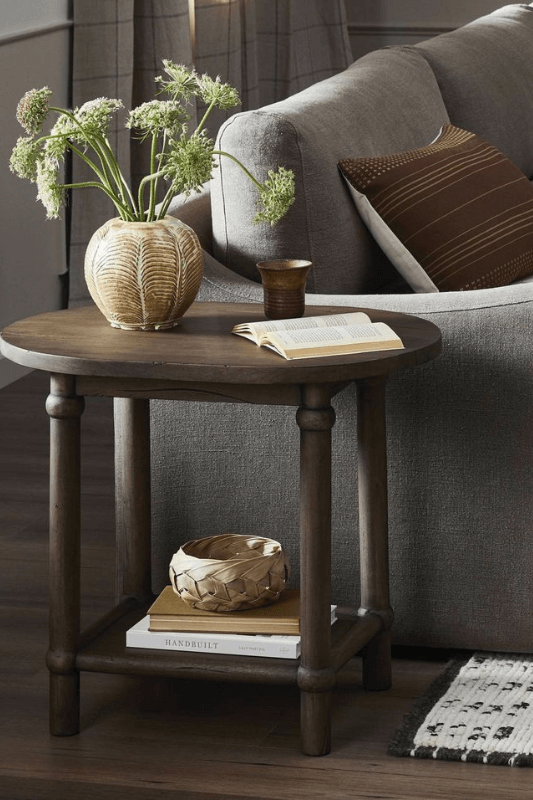
Interior designers often rely on a simple formula when styling end tables:
Lamp + books + one personal object
Here’s why it works:
The lamp adds height and anchors the table
The books create structure and warmth
The personal object keeps the setup from feeling staged
Stack two or three books, place your object on top or slightly to the side of them, and position the lamp just off-center. This creates balance without making the table look stiff or overly symmetrical.
Layer Height to Avoid Flat Styling
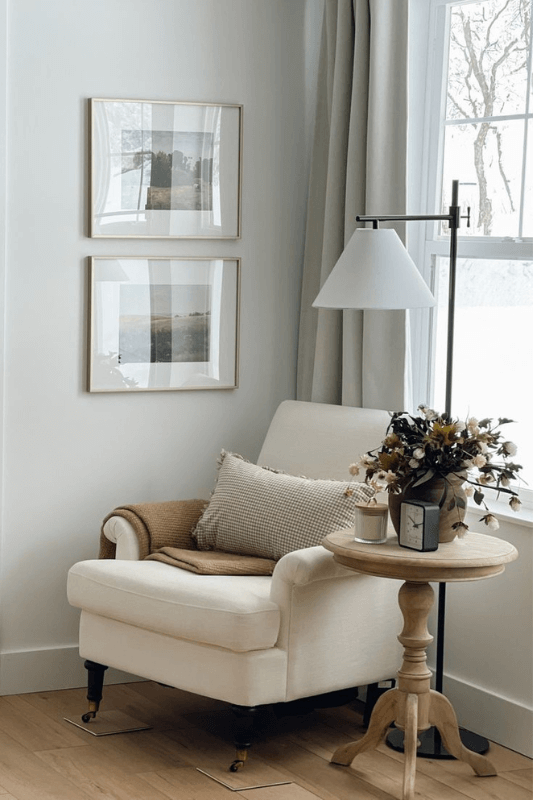
One of the most common end table decor mistakes is keeping everything the same height. When all the objects sit low, the table looks unfinished.
Aim for height variation:
One tall item (lamp or tall vase)
One medium item (plant, candle, or sculpture)
One low item (tray or bowl)
Even with only three pieces, this layering adds depth and visual interest. Flat styling almost always looks accidental.
Choosing the Right Lamp for Your End Table
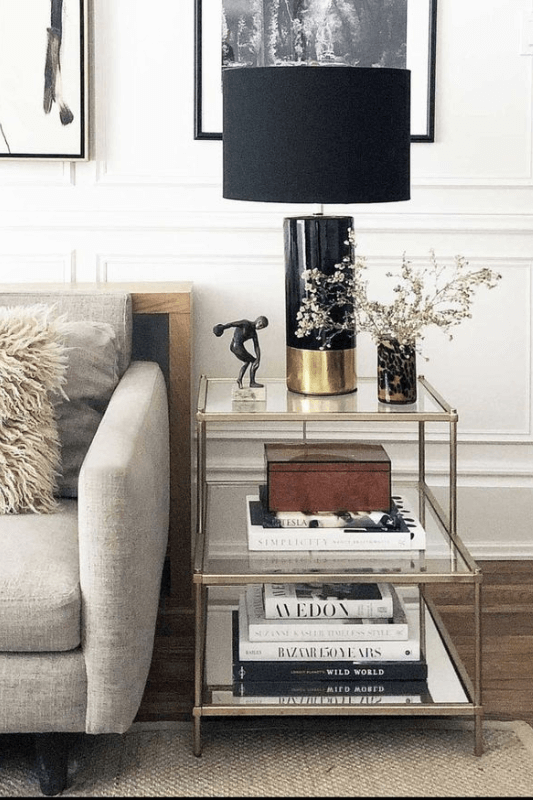
Lamp scale can make or break your end table decor.
Helpful guidelines:
The lamp base should take up about one-third of the table’s width
When seated, the bottom of the lampshade should sit near eye level
Taller sofas or sectionals usually need taller lamps
If a lamp feels “off” but you can’t explain why, it’s often because it’s too small. When in doubt, size up.
Decorative Objects That Add Style Without Clutter
End table decor should feel intentional, not crowded. Instead of many small accessories, choose fewer pieces with presence.
Reliable options include:
A ceramic or stone bowl for texture
A small tray to group items neatly
A plant or branch to soften hard lines
A sculptural object with personal meaning
Negative space matters. Leaving part of the table empty makes the decor feel calmer and more polished.
End Table Decor Ideas by Interior Style
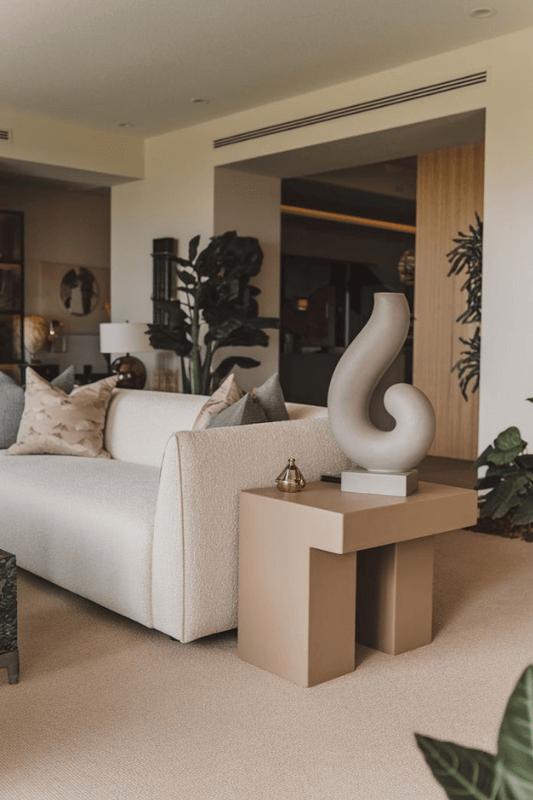
source
Modern
Clean lines, simple color palettes, bold shapes. Stick to fewer objects and let materials stand out.
Traditional
Stacked books, classic lamps, warm finishes like wood or brass.
Minimalist
One lamp and one object. Precision matters more than quantity.
Eclectic
Mix materials, shapes, and personal finds. Keep a loose color palette so the table doesn’t feel chaotic.
The rules stay the same. Only the objects change.
End Table Decor for Small Living Rooms
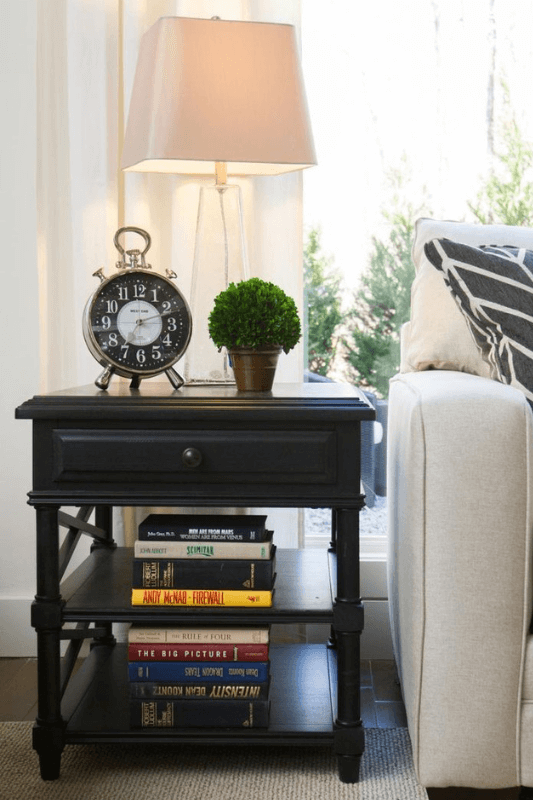
In small spaces, end table decor needs to work harder.
What actually helps:
Choose narrow, round, or pedestal end tables
Use slim or wall-mounted lamps to save surface space
Limit decor to one main object instead of several
Use vertical height instead of surface clutter
In a small living room, a single lamp and one meaningful object will look better than a crowded table every time.
How to Style Two End Tables Without Making Them Look Boring
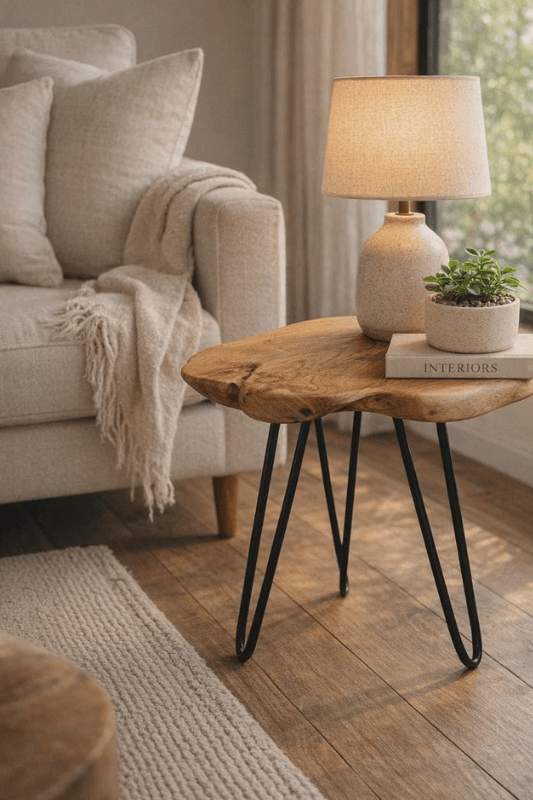
Matching end tables don’t need identical decor. In fact, exact symmetry often feels stiff.
Instead:
Keep lamps similar in height, but vary the shape
Change the decorative object on each table
Repeat materials or colors for cohesion
Think “related, not copied.” Balance matters more than matching.
Common End Table Decor Mistakes to Avoid
Lamps that are too small for the table
Too many tiny accessories
No clear space for practical use
Tables placed too far from seating
Styling matching tables the same
Most of these issues can be fixed by removing one item or replacing several small objects with one larger piece.
FREQUENTLY ASKED QUESTIONS
An end table should include a lamp, one or two decorative items, and enough clear space for practical use, like setting down a drink or book.
Most designers recommend three to five items, depending on the table size. Fewer, larger pieces usually look better than many small objects.
End tables don’t need to match exactly. Using tables with a similar height or material helps create cohesion without making the room feel rigid.
When seated, the bottom of the lampshade should sit close to eye level. This usually means choosing a lamp between 24 and 30 inches tall.
Yes. In rooms with overhead or floor lighting, a vase, plant, or sculptural object can replace a lamp without sacrificing style.
Final Thoughts
End table decor doesn’t need to be complicated. When you focus on function, vary height, and choose objects with intention, the table naturally comes together.
If you’re styling a full living room, end table decor works best when it complements your coffee table and console styling rather than competing with them. Small adjustments here often make a bigger impact than changing the entire room.
If your space feels almost finished but not quite right, your end tables are the perfect place to start.