You can clean your home, style your shelves, and rearrange your furniture, yet something still feels off.
Not messy. Not wrong. Just flat.
This is where one house plant quietly changes everything.
Not a collection. Not a statement wall of greenery. Just one well-chosen, well-placed indoor plant.
In interior design, small organic changes often have the biggest impact. Adding a single plant can soften a space, restore balance, and make a home feel more lived in without adding clutter.
Modern Interior Design Can Feel Visually Hard
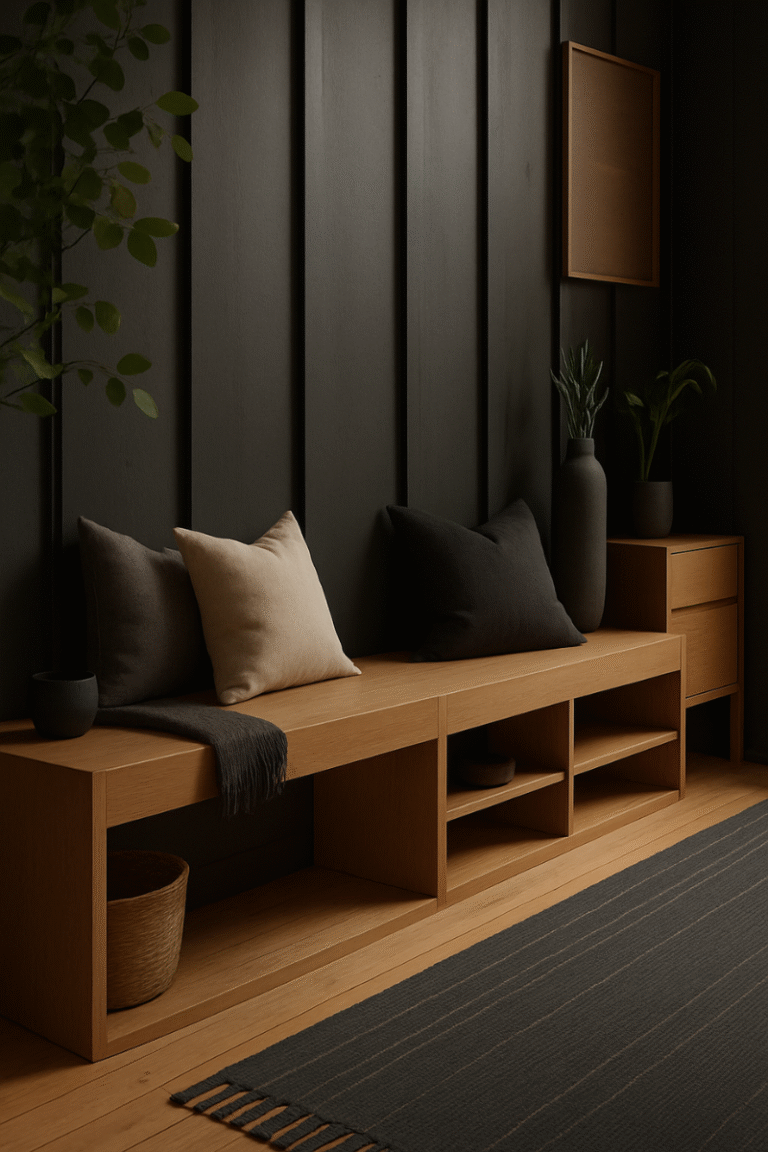
Most modern interior design relies heavily on straight lines and smooth surfaces. Walls, sofas, cabinets, tables, and screens all lean toward clean geometry. Even cozy homes are often built around rectangles, symmetry, and sharp edges.
Over time, this creates subtle visual tension.
Nothing is technically wrong, but the space lacks softness. Your eye moves quickly from one surface to another. There’s nowhere to rest.
A house plant introduces the opposite:
Organic shape
Natural movement
Visual variation
That contrast alone can change how an interior space feels. It breaks rigidity without disrupting the overall design.
Why One Plant Is Often Enough in Interior Styling
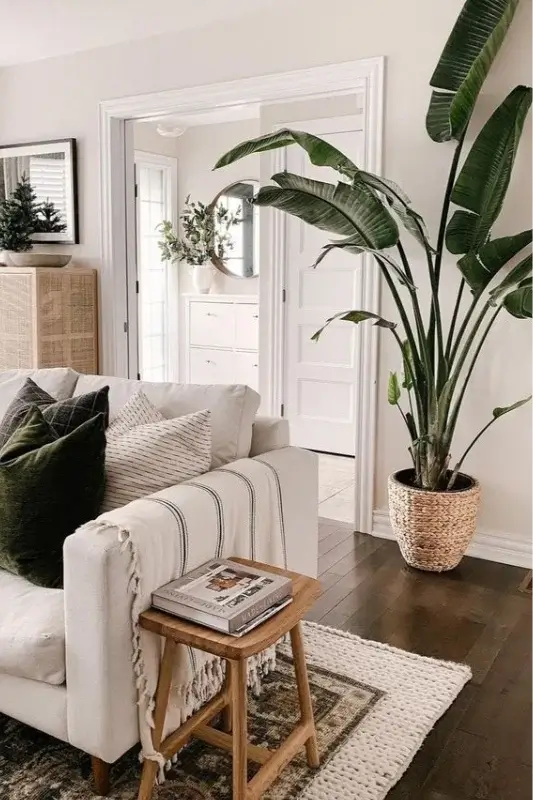
A single plant works because it interrupts the visual pattern without overwhelming the room.
Interior designers use this principle constantly. One curved chair in a room full of straight lines. One textured wall in an otherwise smooth space. One organic element among structured furniture.
House plants do this naturally.
When you add too many plants, they stop acting as relief and start competing for attention. The result is visual noise. One plant, on the other hand, remains intentional. It feels calm, balanced, and considered.
In minimalist and modern interiors, especially, restraint almost always works better than abundance.
A House Plant Creates a Focal Point Without Visual Clutter
Many décor elements compete for attention. Artwork, decorative objects, books, and sculptural pieces all ask to be noticed.
A plant doesn’t.
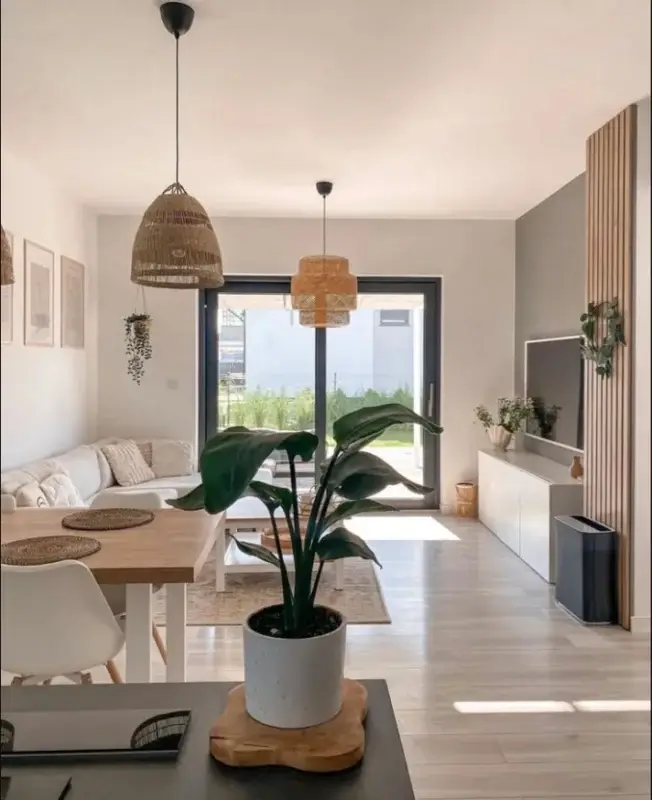
A well-placed indoor plant gives your eyes somewhere to land without demanding focus. You notice it, register it, then move on. This gentle visual rhythm makes a room feel easier to live in.
That’s why one larger house plant often works better than several small plants scattered around a space. One clear focal point is more calming than many competing ones.
Plants Add Warmth Without Adding Clutter
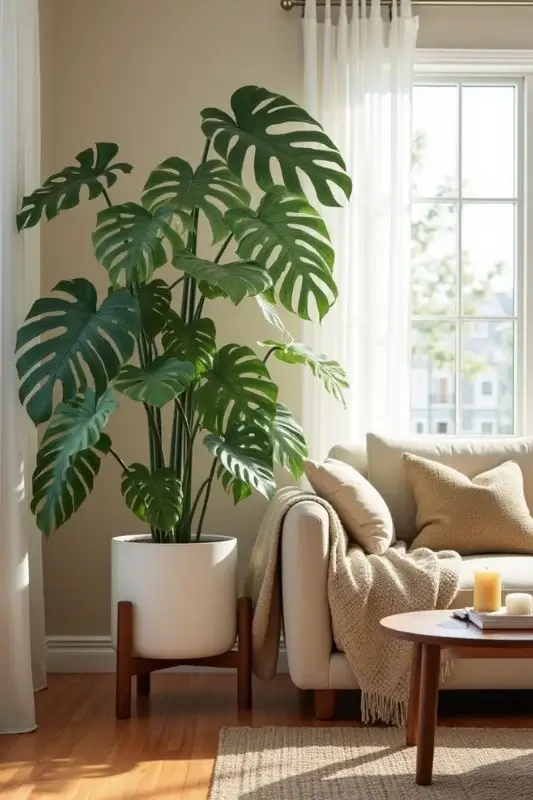
Clutter isn’t just about mess. It’s about visual weight.
Decor objects feel like “things.” They take up mental space. Plants feel different. They add presence without heaviness.
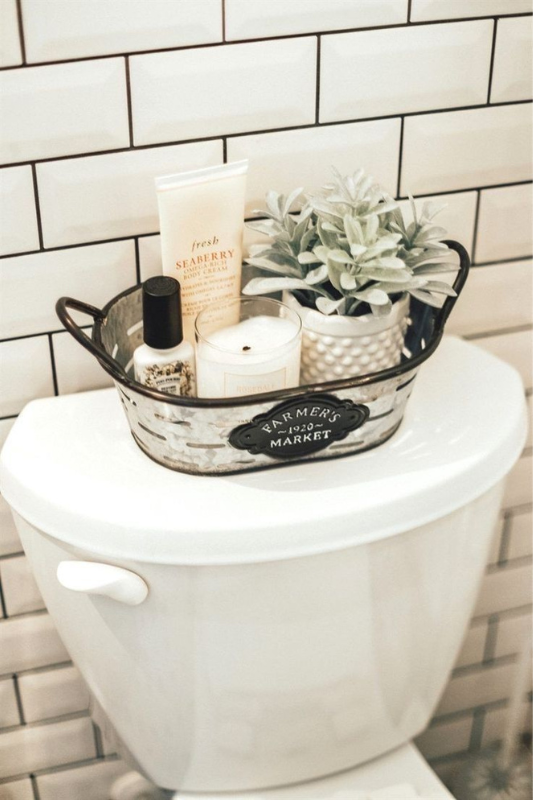
In small homes and apartments, this matters even more. One house plant can make a room feel fuller without making it feel crowded.
It’s one of the few interior décor elements that adds warmth without adding stuff.
House Plants Signal Care, Not Perfection
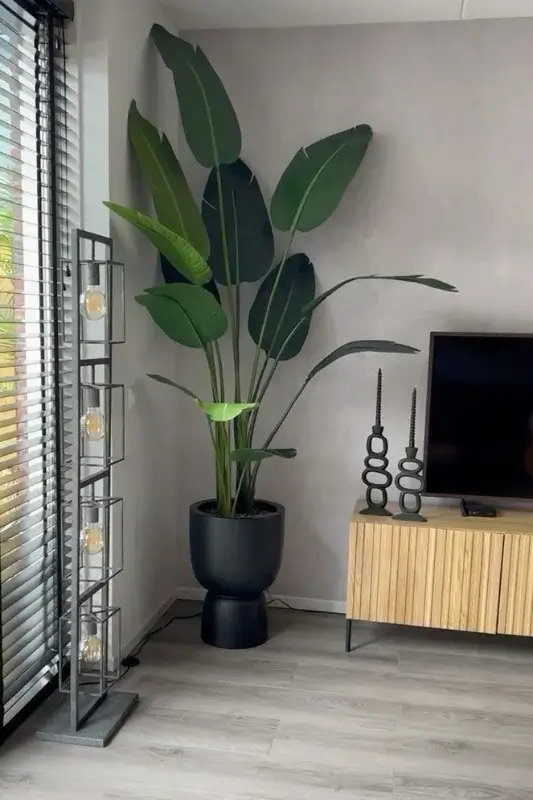
A perfectly styled home can feel intimidating. Untouchable. Slightly cold.
A plant softens that feeling.
It suggests someone lives here. Someone noticed the light. Someone cares for the space, even imperfectly. This is why homes with house plants often feel more welcoming, even when they aren’t perfectly tidy.
A plant doesn’t need to be flawless to work. Slightly uneven leaves or natural imperfections often make an interior feel more human and relaxed.
Where One House Plant Makes the Biggest Impact
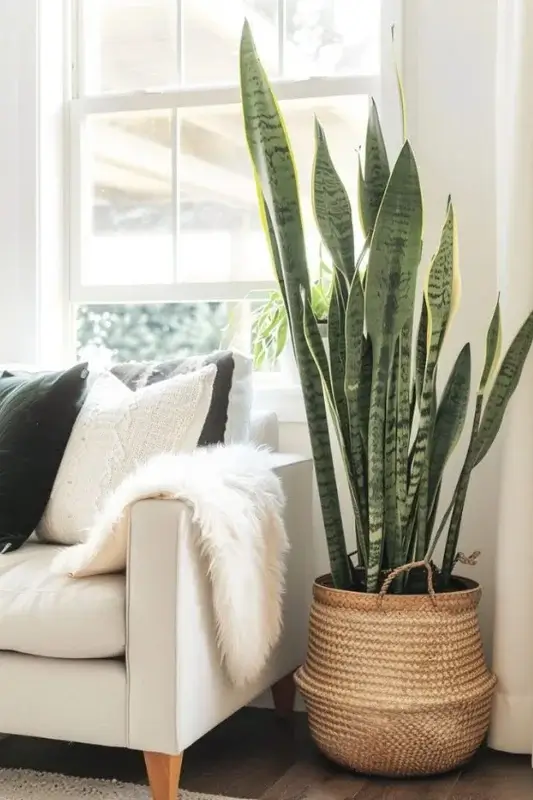
When decorating with plants, placement matters more than the type of plant itself.
The best places for a single house plant:
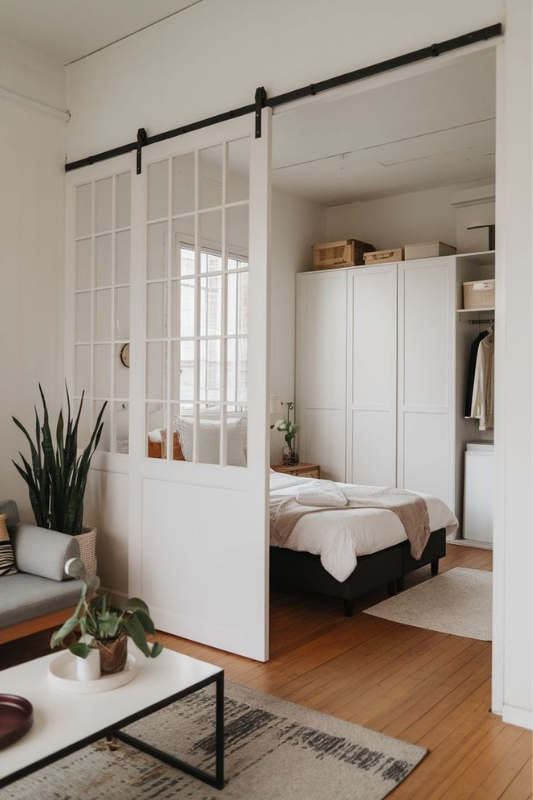
Beside a sofa or armchair to soften hard edges
In an empty corner that feels forgotten
Near a window without blocking natural light
On the floor rather than a crowded shelf
Scale is key. A plant that feels slightly larger than expected usually works better. Small plants tend to disappear visually unless grouped, which defeats the purpose of keeping things simple.
House Plant Interior Design FAQs
In most interiors, one well-placed house plant is enough. Too many plants can create visual clutter rather than a sense of calm.
Minimalist interiors don’t require plants, but a single plant can soften hard lines and add warmth without disrupting simplicity.
The best placement is near seating areas, in empty corners, or in areas with natural light without blocking windows.
Takeaway: One Plant Can Transform Your Interior
You don’t need to become a plant person.
You don’t need a routine or a collection or a perfectly styled shelf.
Sometimes, one house plant is enough to make a home feel calmer, warmer, and more balanced.
Not because it’s trendy.
Because it restores visual harmony.