Your bedroom should be the place where your body and mind finally slow down. It’s where your day begins quietly and where it should end without noise or distraction. When a bedroom feels calm and intentional, rest comes easier. When it feels cluttered or overstimulating, even sleep can feel like work.
If you’re drawn to spaces that feel peaceful but still warm and lived in, Japandi bedroom design may be exactly what you’re looking for. Japandi blends the quiet simplicity of Japanese interiors with the comfort and warmth of Scandinavian design. The result is a bedroom style that feels minimal without being cold, functional without feeling bare, and soothing without trying too hard.
Below are Japandi bedroom ideas that focus on balance, natural materials, and thoughtful restraint. Each idea shows how small, intentional choices can transform your bedroom into a space that feels grounded, calm, and deeply restorative.
1. Combine Neutral and Natural Tones
Japandi bedrooms are often built on a neutral base, but that doesn’t mean the space has to feel flat. Soft whites, warm beiges, and muted grays create a calming foundation, while natural tones like warm browns, clay, soft greens, or dusty blues add depth. The key is keeping everything subtle and cohesive so the room feels layered, not busy.
2. Mix Different Wood Tones Thoughtfully
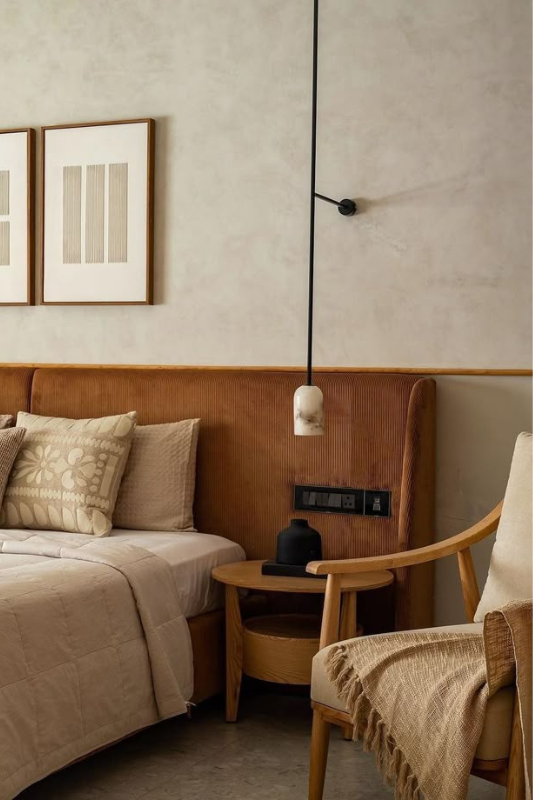
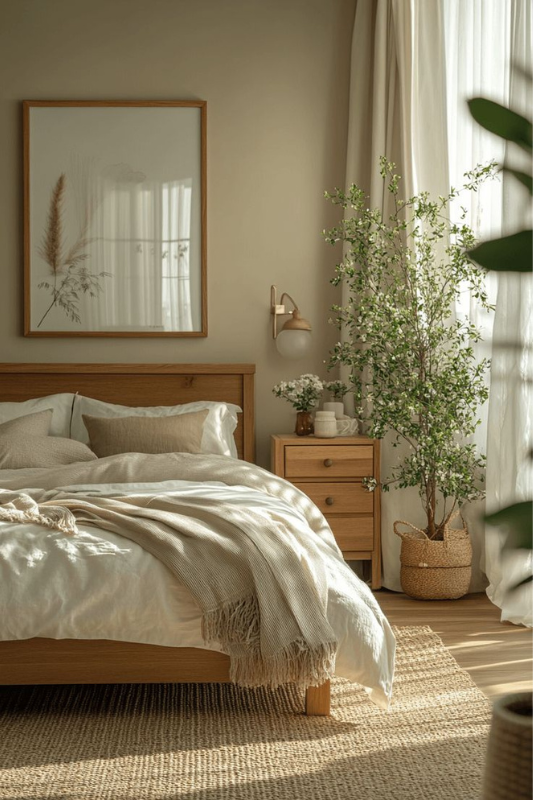
Wood plays a central role in Japandi design, and mixing tones can add warmth and visual interest. Light oak, medium walnut, and darker accents can coexist beautifully when the finishes feel natural and understated. Instead of matching everything perfectly, focus on balance and texture to create a space that feels organic and relaxed.
3. Layer Soft and Natural Textures
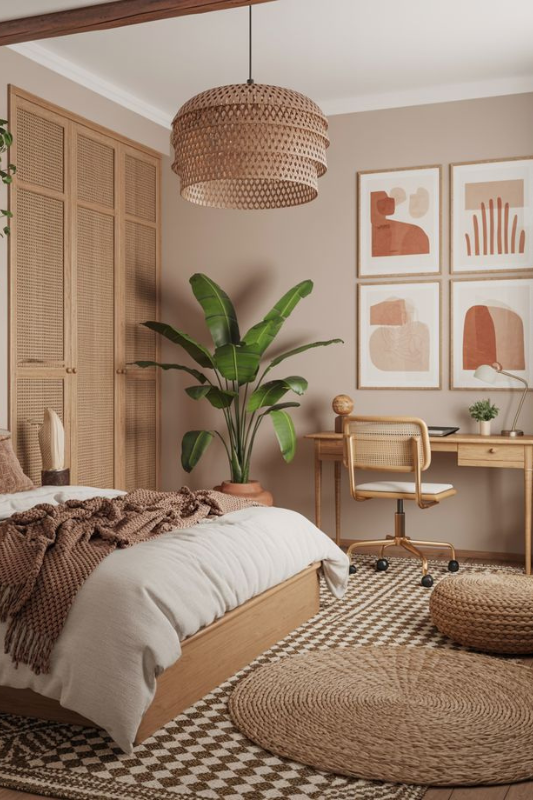
Texture brings comfort to a minimalist space. Linen bedding, woven throws, wool rugs, and soft cotton upholstery prevent a Japandi bedroom from feeling too stark. Layering different textures keeps the room visually interesting while maintaining the calm, grounded atmosphere the style is known for.
4. Bring in Nature-Inspired Details
Nature is an essential part of Japandi design. This can be as simple as botanical artwork, subtle floral patterns, or organic shapes in decor. Even one thoughtfully placed plant or nature inspired textile can help connect the bedroom to the outdoors and reinforce a sense of calm.
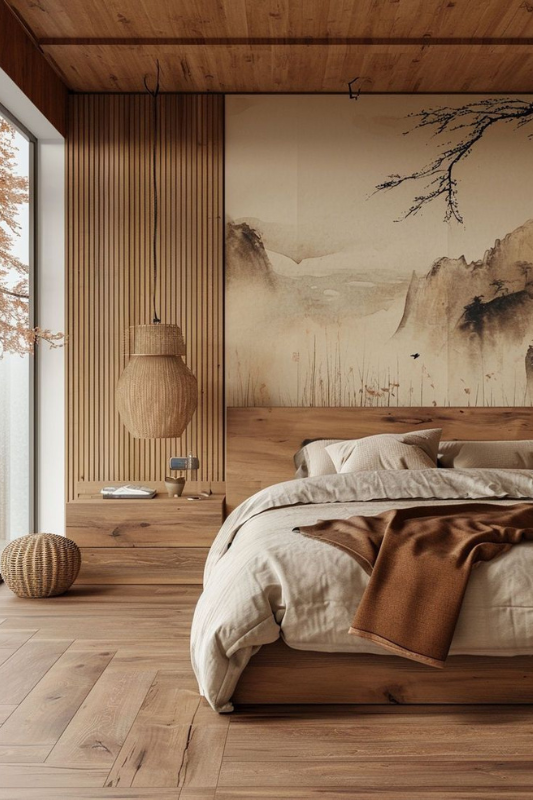
5. Streamline Furniture and Decor
Japandi bedrooms favor intention over excess. Furniture pieces are few, but purposeful. Instead of filling every corner, focus on what you truly need. A well-chosen bed, simple nightstands, and minimal decor allow the room to breathe and make the space feel restful rather than crowded.
6. Let Natural Light Take the Lead
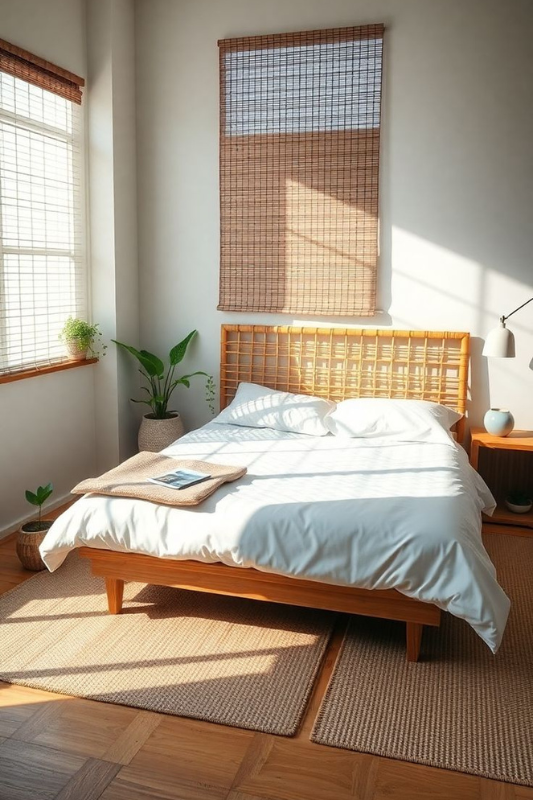
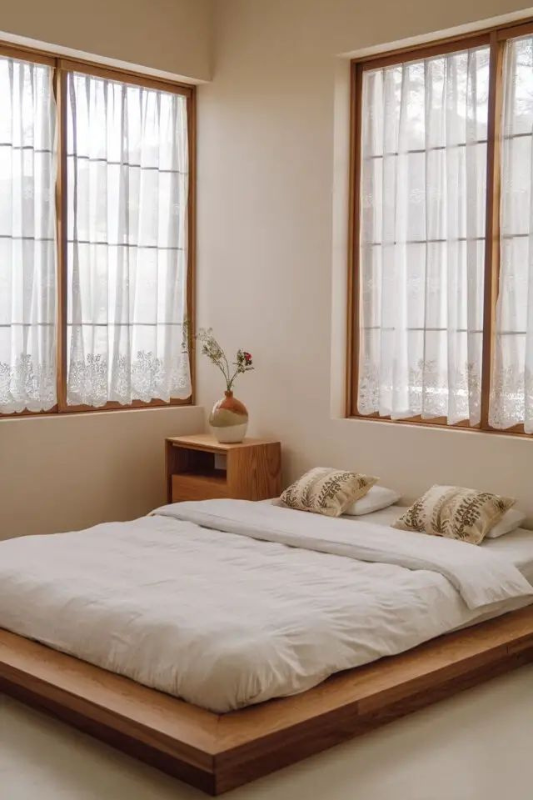
Natural light adds warmth and softness to Japandi interiors. Sheer curtains, light window treatments, or uncovered windows help sunlight filter in gently. The goal is not brightness, but warmth. When natural light becomes part of the design, the bedroom feels more open and calming throughout the day.
7. Add Interest with Simple Art
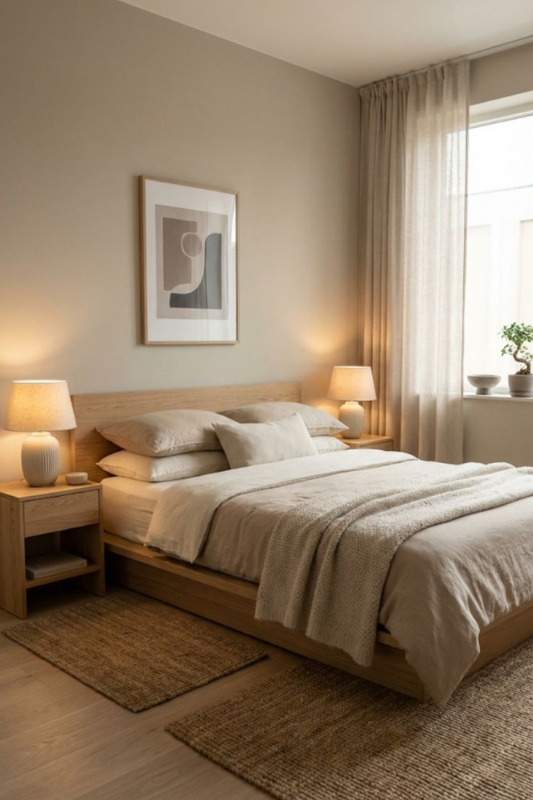
Artwork in a Japandi bedroom should feel calm and intentional. Abstract pieces, nature photography, or minimalist prints work well when they complement the room rather than dominate it. One strong piece of art is often more effective than several smaller ones, helping maintain a sense of visual calm.
8. Choose a Low Wooden Bed Frame
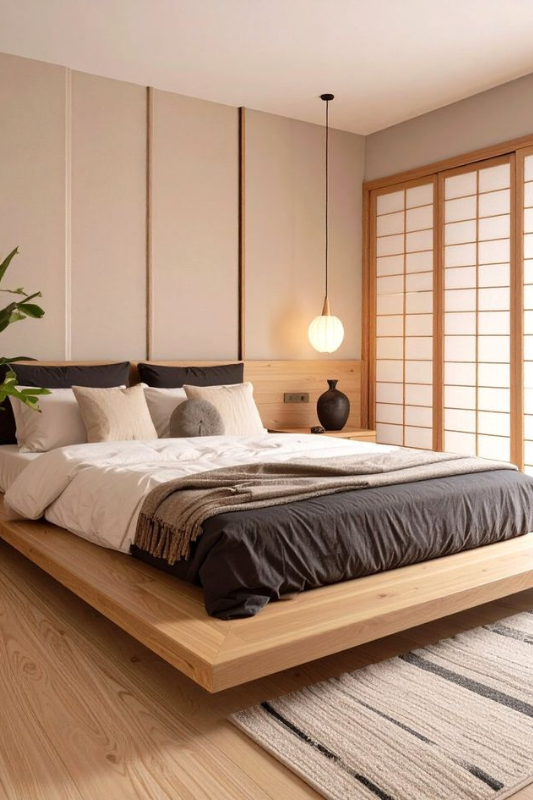
Low-profile beds are a signature element of Japandi design. They keep the room feeling grounded and visually open, while reinforcing the connection to Japanese interiors. Paired with soft bedding and natural materials, a low wooden bed creates a peaceful focal point without overpowering the space.
9. Introduce Subtle Rustic Elements
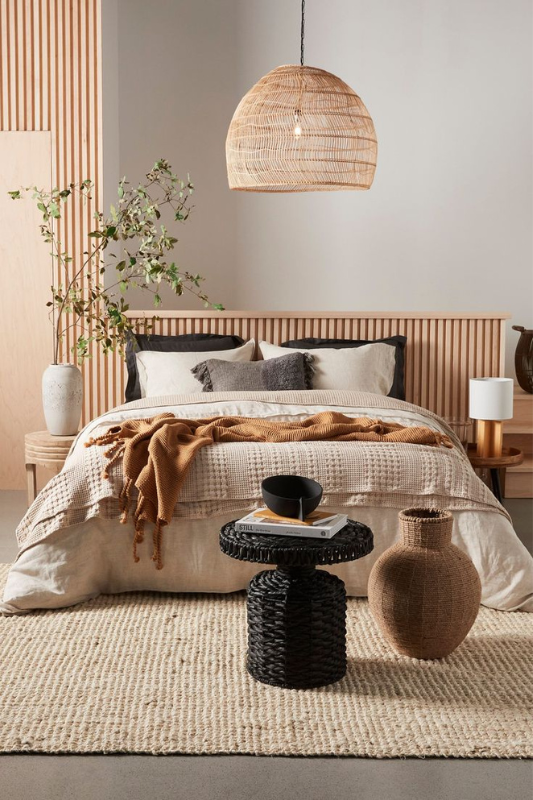
Japandi design allows for a touch of rustic character. Handcrafted stools, raw wood benches, or slightly imperfect finishes add warmth and authenticity. These elements balance the clean lines of Scandinavian design with the wabi sabi appreciation for natural imperfections.
10. Create a Multi-Purpose Space When Needed
A Japandi bedroom can easily serve more than one purpose. Whether it doubles as a meditation area, reading nook, or guest room, flexibility is part of the design philosophy. Simple layouts and adaptable furniture make it easy to shift the function of the space without sacrificing calm.

11. Focus on Balance in Every Detail

Balance is at the heart of the Japandi style. Light and dark elements, soft and structured textures, warm and cool tones all work together to create harmony. Nothing should feel too heavy or too empty. When balance is achieved, the room naturally feels serene and complete.
12. Create a Visual Anchor
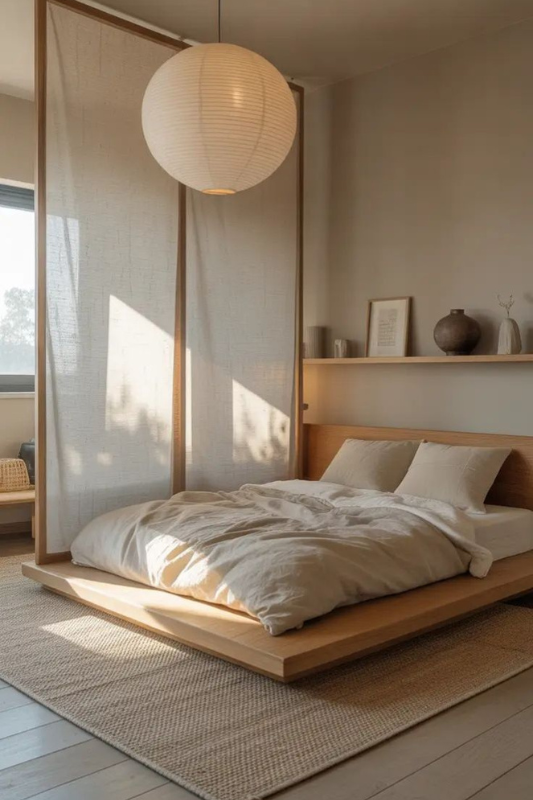
In a bedroom dominated by neutral tones, a visual anchor helps ground the space. This could be a darker rug, a wood feature wall, or a contrasting headboard. The anchor adds depth without breaking the calm, giving the eye a place to rest.
A Japandi bedroom is not about following strict rules. It’s about creating a space that feels peaceful, intentional, and supportive of rest. By focusing on natural materials, thoughtful design, and balance, you can transform your bedroom into a retreat that feels timeless, calm, and truly your own.