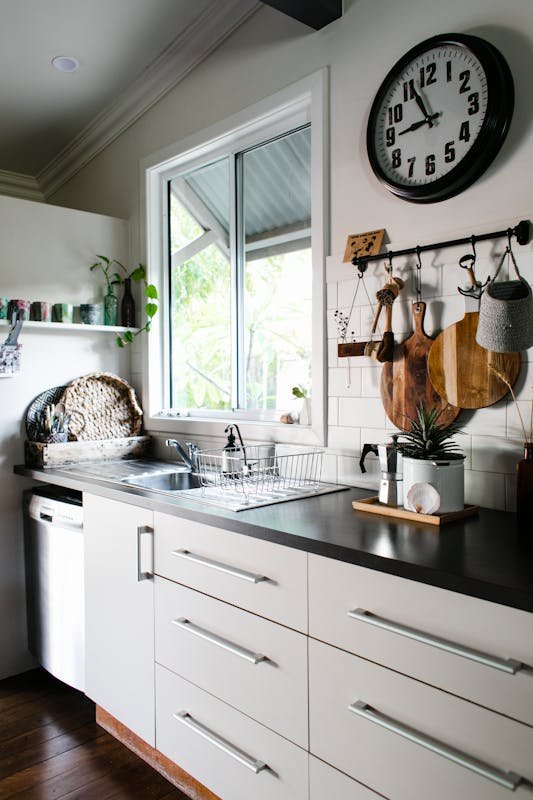
15 Cozy Entryway Ideas for a Warm, Welcoming Home
This site contains affiliate links. I may earn a small commission, at no extra cost to you.
A cozy entryway does not need to be large or filled with decor. In fact, the most welcoming entrances usually combine just a few things well: practical storage, furniture that fits the space, warm lighting, and decorative pieces that make the area feel connected to the rest of the home.
This becomes even more important when decorating a small entryway or narrow hallway. A bench that is too deep, an oversized console, or too many accessories can quickly make the entrance feel crowded rather than inviting.
Whether your front door opens into a compact apartment entrance, a long hallway, or a larger foyer, these cozy entryway ideas will help you create a space that feels warm, organized, and thoughtfully styled.

1. Style a Warm Wood Entryway Bench
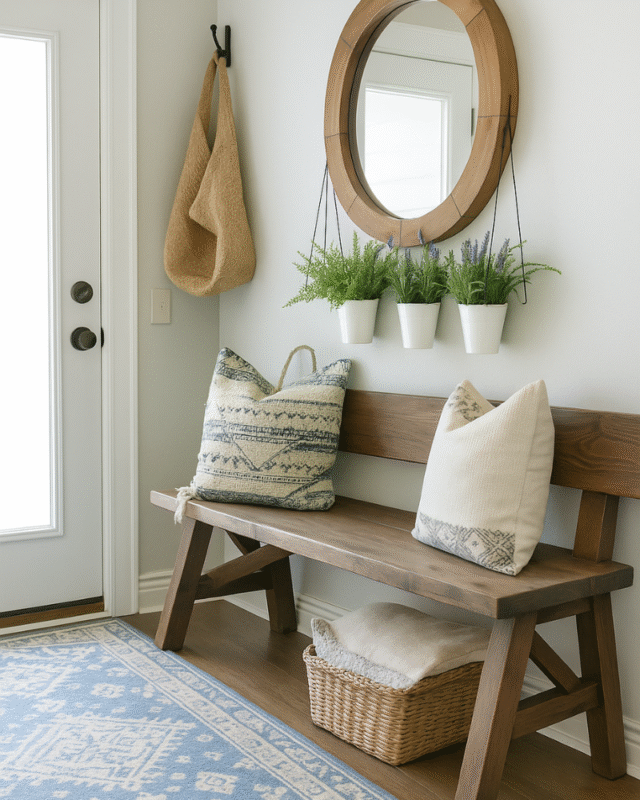
A wooden bench can instantly give an entryway structure while also providing a practical place to sit when putting on or taking off shoes.
For a cozy, modern look, choose a bench with a warm natural finish such as oak, walnut, or medium-toned wood. The wood introduces warmth without requiring lots of additional decor, which makes this particularly useful in minimalist and modern organic entryways.
Scale is important. In a narrow entryway, look for a slim bench that does not interrupt the walking path. If your entrance is wider, a longer bench can help fill an empty wall and create a clear focal point.
You can style the bench with one cushion, a folded throw, or a basket underneath, but leave enough of the seat uncovered for it to remain functional.
If storage is a priority, choose an entryway bench with drawers, cubbies, or open space underneath for shoes and baskets.
2. Layer Soft Textures for a Cozy Entryway
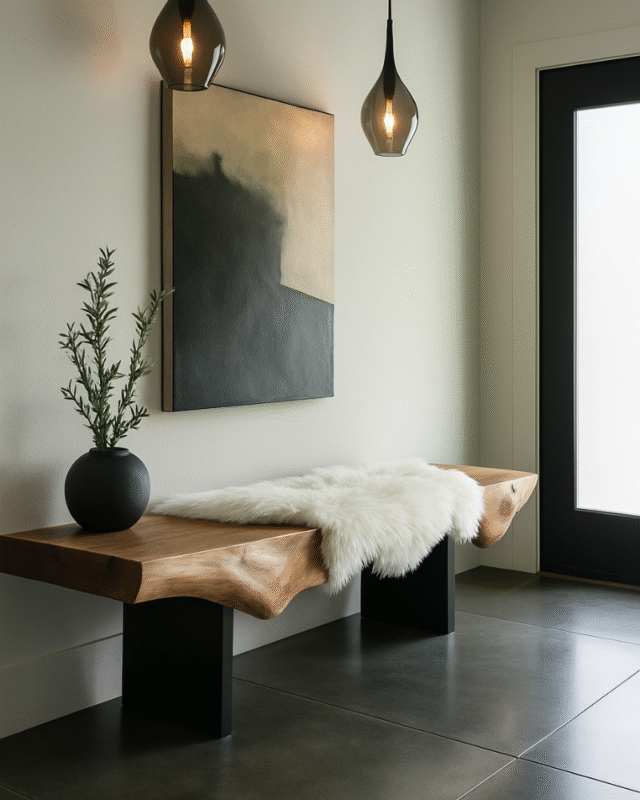
Entryways often contain hard surfaces such as flooring, painted walls, mirrors, wood furniture, and metal fixtures. Adding one or two soft textures can keep the space from feeling cold.
A faux sheepskin, linen cushion, small throw, or upholstered bench pad can introduce softness without taking up much room.
The key is not to add everything at once.
If your bench already has an upholstered seat, you may only need one lumbar cushion. A simple wooden bench can handle a little more layering, such as a cushion paired with a casually draped throw.
Stick with fabrics that complement your existing palette. Cream, oatmeal, taupe, muted olive, rust, charcoal, and warm beige all work well in cozy entryway decor.
Texture is usually more effective than using lots of different colors. Linen, wool, cotton, bouclé, and woven fabrics can create visual depth while allowing the overall entryway to remain calm and cohesive.
3. Use a Simple Rug to Ground the Entryway
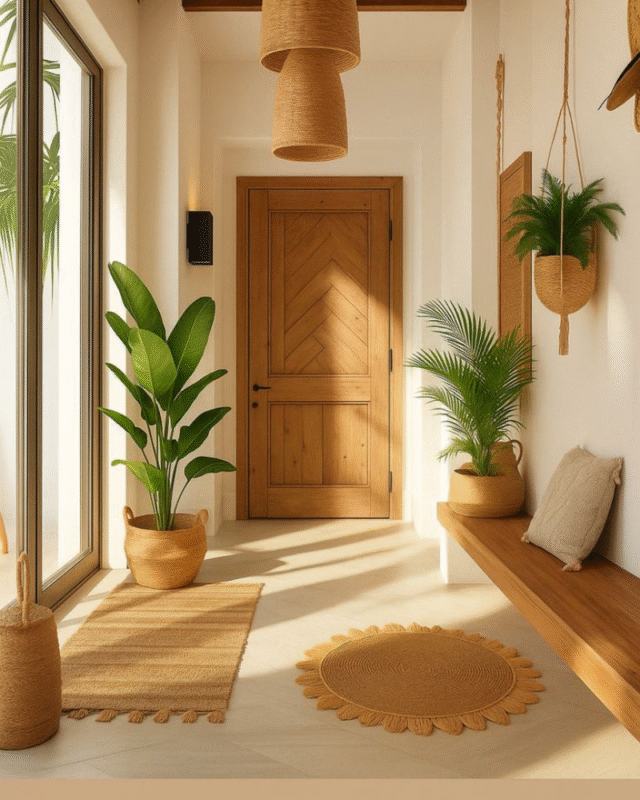
A rug helps define the entrance, particularly in homes where the front door opens directly into a hallway or living space.
For a long, narrow entryway, a runner usually makes more sense than a small rectangular rug because it follows the shape of the space. In a wider foyer, a larger rectangular or oval rug can help visually anchor a bench or console.
Avoid choosing a rug that is so small that it appears to float in the middle of the floor.
The rug should relate to the furniture and architecture around it rather than looking like a separate decorative piece.
Practicality matters here too. Entryways receive plenty of foot traffic, so a low-pile or flat-weave rug is generally easier to maintain than something very thick or fluffy.
Before buying one, also check that your front door has enough clearance to open comfortably over the rug.
For additional warmth, choose subtle patterns, woven textures, earthy colors, or muted neutrals that complement the rest of your entryway decor.
4. Add Cushions Without Overstyling the Bench
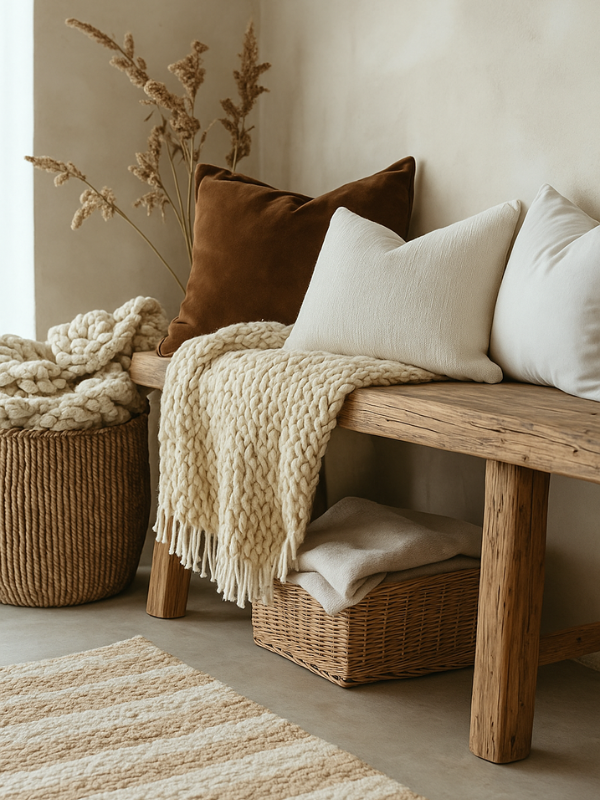
Cushions can make an entryway bench look more inviting, but this is one area where it is easy to overdecorate.
A bench still needs to function as a bench.
Instead of covering the entire seat, use one or two cushions that add texture or repeat colors already present elsewhere in the entryway.
A lumbar pillow works particularly well on a narrow bench because it adds softness without taking up as much seating space as several square cushions.
You can also mix materials rather than patterns. For example, pair a simple linen cushion with a woven or bouclé one in a similar color family.
If your entryway already includes a patterned rug or bold accent wall, keep the cushions relatively simple.
The goal is to make the bench look comfortable and styled without making someone move a pile of pillows every time they need to sit down.
This small distinction can make entryway bench ideas look much more practical and intentional.
5. Create Depth With a Dark or Muted Accent Wall
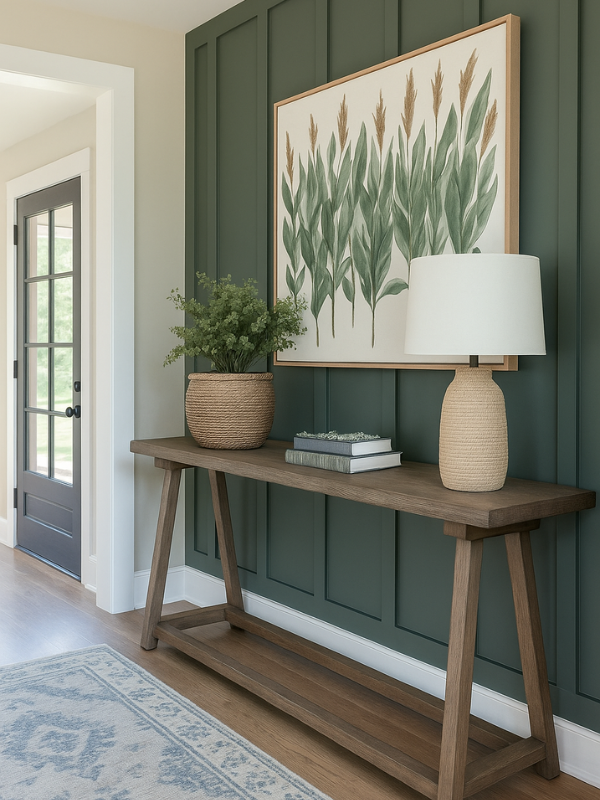
An accent wall can give an entryway definition, especially when there is no separate foyer.
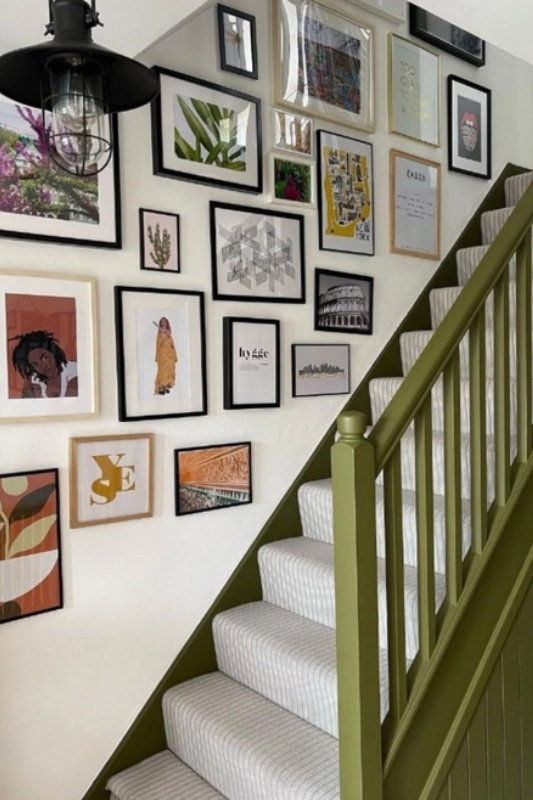
Deep olive, muted sage, charcoal, navy, warm taupe, clay, or other earthy shades can create contrast behind a wood bench or console and make the entrance feel more established.
This works particularly well when the surrounding furniture is lighter.
If your entryway is very narrow or receives little natural light, you do not necessarily need to paint every wall dark. Instead, use the deeper color on one feature wall, behind a bench, or on the lower half of the wall.
You can then repeat the color subtly through a cushion, rug, artwork, or decorative object to make the design feel connected.
Lighting is especially important when using darker paint. A nearby lamp, wall sconce, or other warm light source can prevent a dramatic wall from making the entrance feel gloomy.
The result should feel cozy and defined rather than enclosed.
6. Use Woven Baskets for Practical Entryway Storage
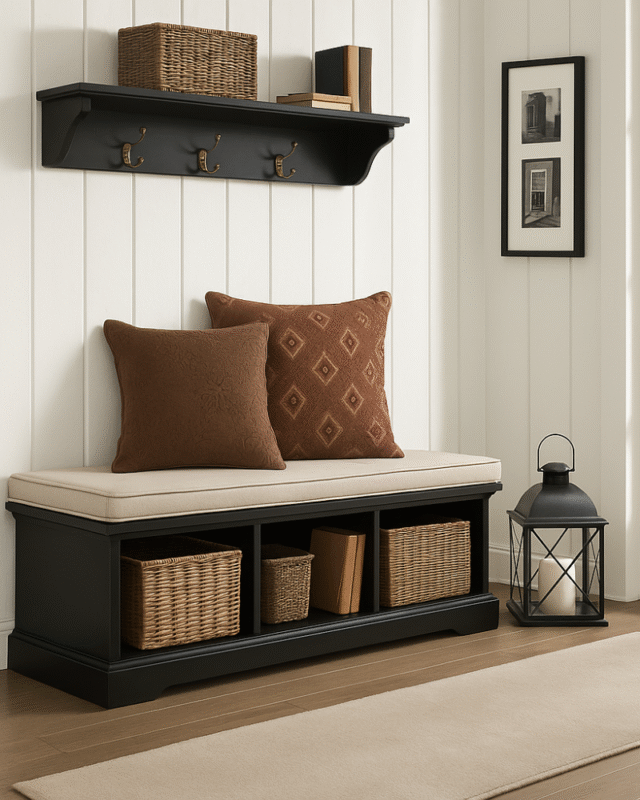
Some of the best entryway storage ideas are also decorative.
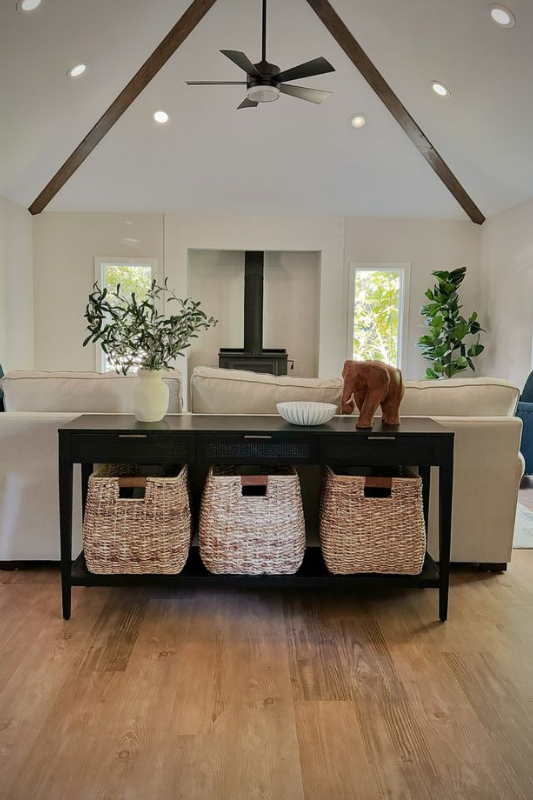
Woven baskets can hide everyday clutter while introducing natural texture, particularly when placed underneath a wood bench or inside open shelving.
Use open baskets for things you regularly need, such as shoes, slippers, reusable shopping bags, scarves, or children’s accessories. Lidded baskets work better for items you want completely out of sight.
Rattan, seagrass, cane, and jute baskets all complement warm wood and neutral entryway furniture. If you love this combination of wood, baskets, practical storage, and cozy textures, these farmhouse home decor ideas show how to carry the same materials into other areas of your home.
Avoid squeezing too many baskets into the space simply because there is room underneath the bench.
Two larger baskets often look calmer than several small mismatched containers.
For families, you can also assign a basket or cubby to each person. This creates an easy system for keeping shoes and everyday essentials from spreading across the floor.
Good storage should make the entryway easier to use while still supporting the overall design.
7. Add One Well-Placed Plant
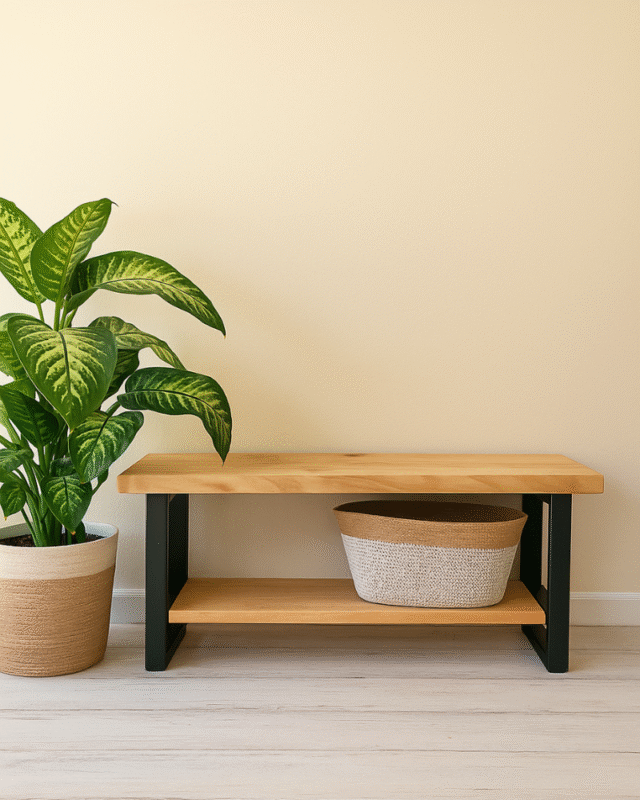
A little greenery can soften an entryway and add life to a space filled with hard surfaces.
The important part is choosing a plant that fits both the available light and the available floor space.
If you have an empty corner beside a bench or console, a taller plant can fill the vertical space beautifully without requiring more furniture.
In a small or narrow entryway, however, a large floor planter may interrupt the walking path. Place a smaller plant on the console or a shelf instead.
Snake plants, ZZ plants, and pothos are often used indoors because they can work in a variety of home settings, although you should still choose a plant according to the actual light conditions in your entrance.
If your entry receives almost no suitable natural light, quality faux greenery can achieve a similar visual effect without struggling to survive.
One well-placed plant is usually enough. You are adding softness and balance, not creating an indoor garden.
8. Use a Large Mirror to Open Up the Space
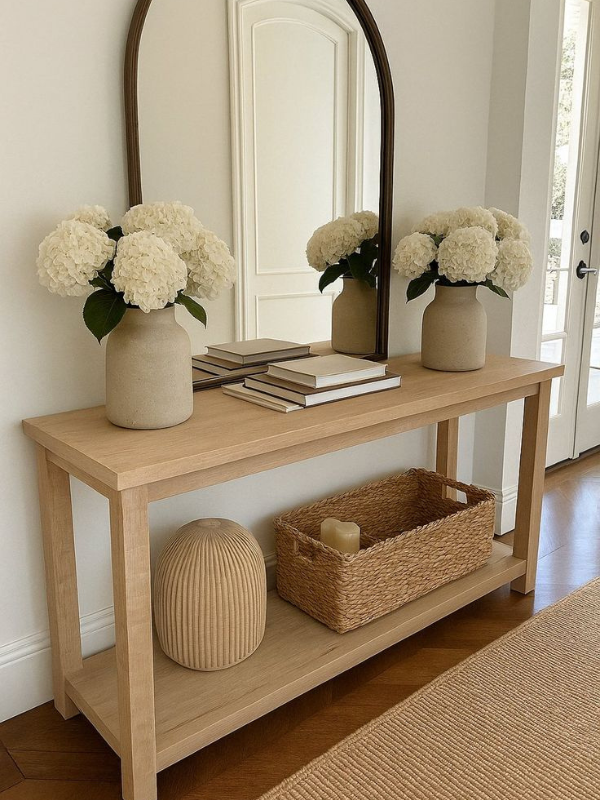
A mirror is one of the most useful pieces you can add to a small entryway because it provides both function and visual impact.
A large mirror can reflect available light and help a compact entrance feel more open. It also gives you a convenient place for a final check before leaving the house.
Consider the shape in relation to the furniture underneath it.
A round mirror can soften a console or bench with strong straight lines. Arched mirrors introduce a more architectural element, while simple rectangular mirrors work particularly well in modern or minimalist interiors.
Scale is just as important.
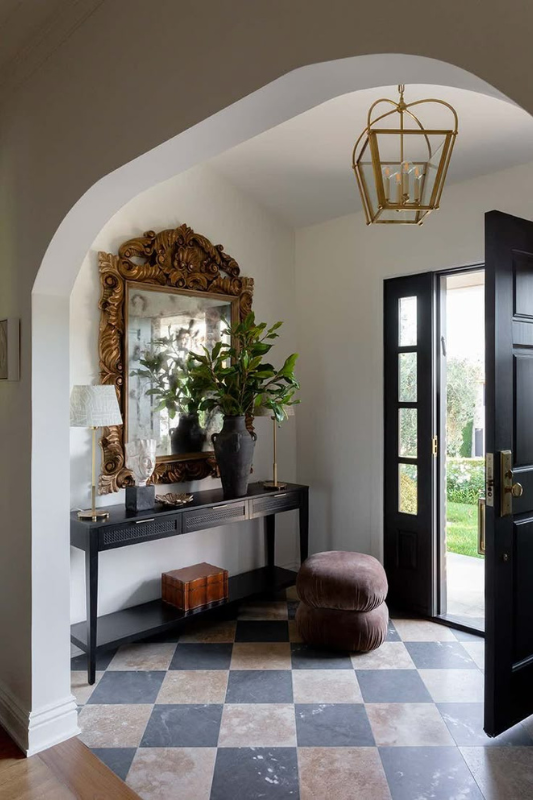
A tiny mirror hanging above a long console can look disconnected from the furniture. Choose something substantial enough to relate to the width of the piece underneath while still leaving some wall space around it.
Also pay attention to the reflection. If possible, position the mirror where it can reflect light, greenery, artwork, or another attractive part of the home instead of clutter.
9. Create a Calm Scandinavian-Inspired Entryway

If you like a light, uncluttered look, Scandinavian-inspired entryway ideas are particularly easy to adapt to small spaces.
Begin with a restrained palette of light wood, white, cream, soft gray, beige, or muted earthy shades.
Then introduce warmth through texture rather than adding lots of color.
A woven bench, natural wood furniture, textured basket, simple rug, and one plant can be enough to make the entrance feel complete.
Black details can also provide contrast. A matte black hook, thin mirror frame, or small lighting fixture prevents an all-neutral entryway from looking flat.
The secret is leaving some breathing room between objects.
Not every wall needs artwork, and not every surface needs decorative accessories.
This approach works especially well in compact entrances because the limited color palette helps the different elements feel connected rather than visually competing with one another.
Simple does not have to mean empty. The right materials can add plenty of depth.
10. Warm Up the Entryway With Soft Lighting
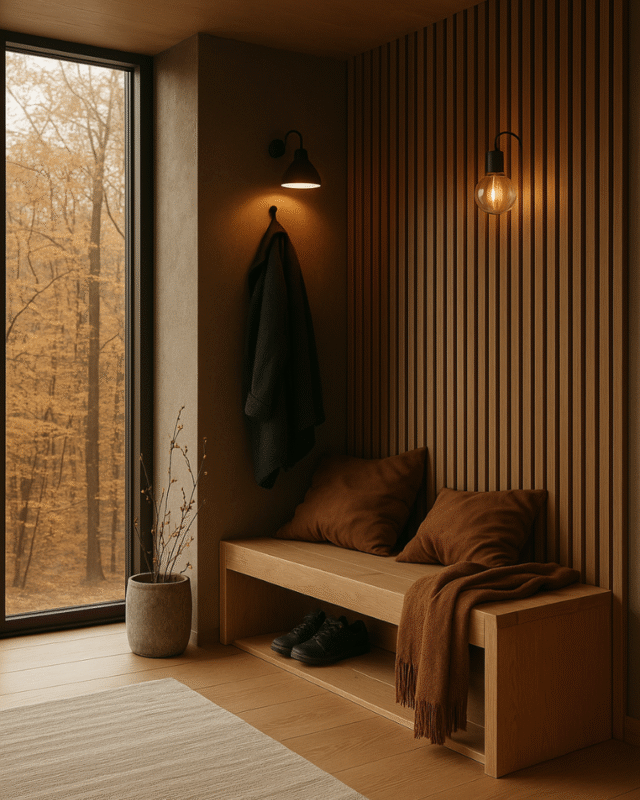
Good lighting can completely change how an entrance feels.
Many entryways receive limited natural light, particularly those located along interior hallways. Depending only on a bright ceiling light can make the space feel harsher than necessary.
If you have a console, add a small table lamp to create a softer layer of illumination in the evening.
Wall sconces are another excellent choice, especially when surface space is limited. They can be installed beside a mirror, artwork, or bench and provide decorative interest at the same time.
Warm-white bulbs around 2700K to 3000K generally create the softer residential glow most people associate with cozy interiors.
If your entryway is very small, you do not need multiple lamps. One carefully positioned secondary light source can make a significant difference.
Choose a fixture that works with the rest of the materials in the room, such as ceramic, brass, matte black, wood, or textured fabric.
11. Style a Slim Console Table Without Clutter
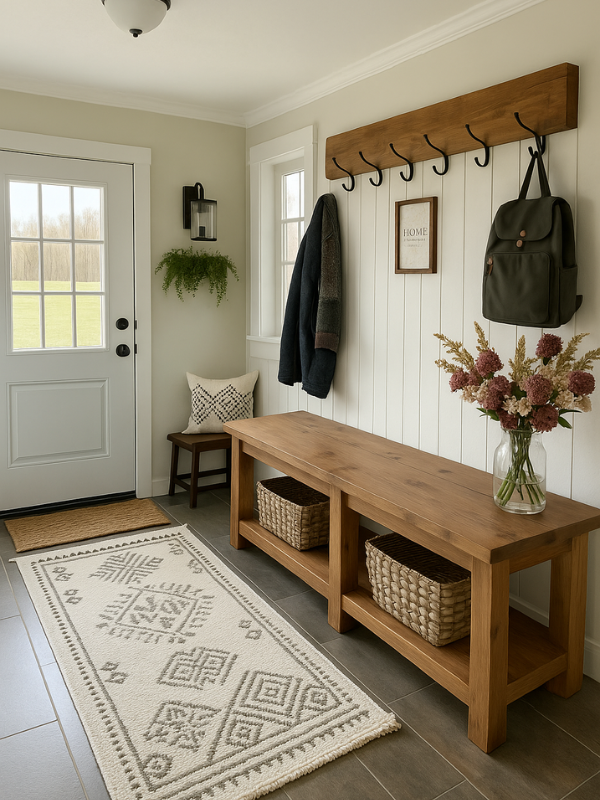
A console table gives you somewhere to place keys, mail, lighting, and decor, but its depth needs to work with the entrance.
For a narrow entryway, look for a slim console rather than automatically choosing a full-depth cabinet. A floating shelf can work even better if floor space is extremely limited.
Once you have the surface, avoid filling it from end to end.
Start with something functional, such as a small tray or bowl for keys. Then add one taller piece, such as a lamp, vase, or plant, followed by one smaller decorative item if the space needs it.
A mirror or artwork above the console provides visual height without using additional surface space.
If you want more examples of balancing lamps, baskets, mirrors, books, and decorative pieces without overcrowding the surface, these console table decor ideas use many of the same styling principles.
If mail constantly accumulates near the front door, give it a specific drawer or organizer rather than letting it become part of the styling.
The best entryway console table ideas combine everyday function with enough empty space to keep the area looking calm.
12. Keep Decorative Pieces Simple and Intentional
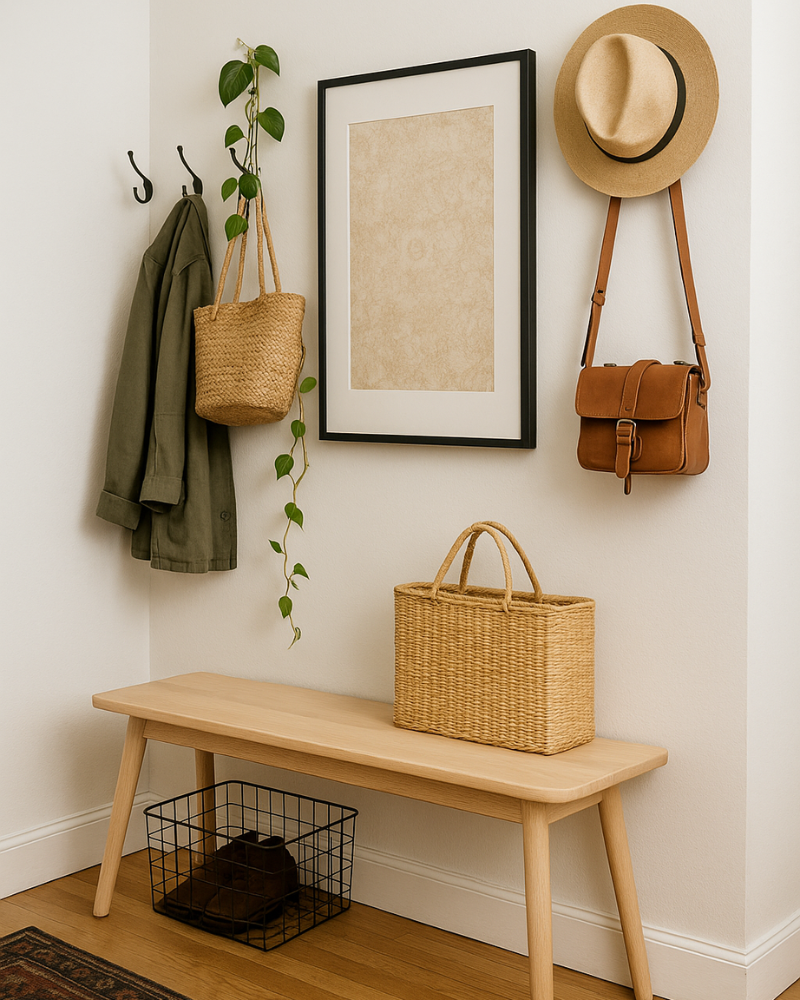
An entryway does not need dozens of decorative objects to look finished.
In fact, limited square footage makes restraint even more important.
Instead of spreading many small accessories across a bench, console, and walls, choose a few pieces with more visual impact.
One large artwork may work better than several small frames. A single sculptural vase can look stronger than a collection of tiny ornaments. One attractive basket can provide both storage and texture.
This is also a good place to combine pieces from different styles or eras. An older wood console, for example, can look fresh beneath a simple contemporary mirror. If you like that collected look, this guide to mixing vintage and modern decor explains how to balance old and new pieces without making a room look mismatched.
Leaving some visible wall and surface space also prevents the entrance from feeling crowded.
Think about what someone sees when they first walk through the door.
There should be an obvious focal point, whether that is the bench, mirror, console, artwork, or accent wall.
Everything else should support that feature rather than competing for attention.
This is especially important with small entryway decor ideas, where even a few unnecessary items can quickly create visual clutter.
13. Mix Wood, Woven Textures, and Natural Materials
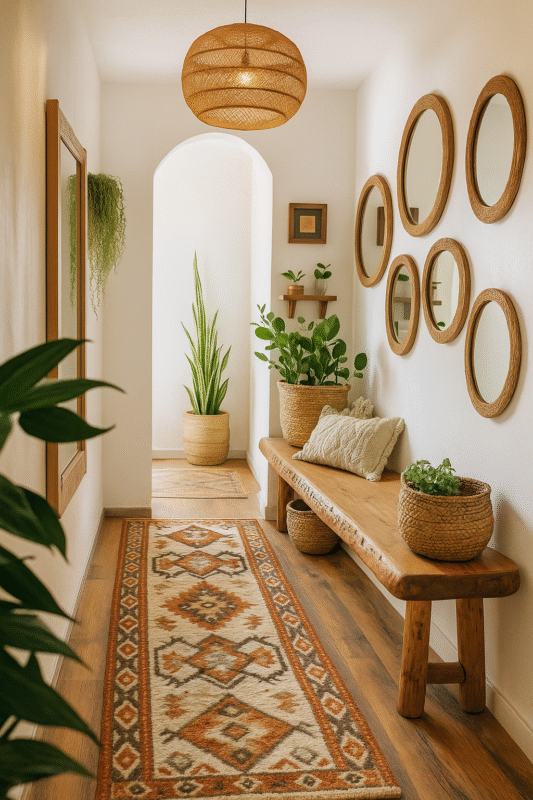
A neutral entryway can still feel layered and interesting when different materials are used thoughtfully.
Wood, rattan, jute, cane, linen, wool, leather, and ceramic can all introduce texture without requiring a busy color palette.
For example, pair a warm wood bench with a woven basket and a textured rug. Add a ceramic planter or linen cushion, and you already have several different surfaces working together.
You do not need to use every natural material at once.
Choose two or three dominant textures and allow them to repeat throughout the space.
If your bench is wood and your storage baskets are woven, perhaps the rug can provide softness rather than introducing another strong material.
This is particularly effective in modern organic and Scandinavian-inspired entrances, where texture often does more of the decorating than pattern.
The result feels warm and collected without relying on excessive accessories.
14. Add Wall Hooks for Bags, Coats, and Everyday Essentials
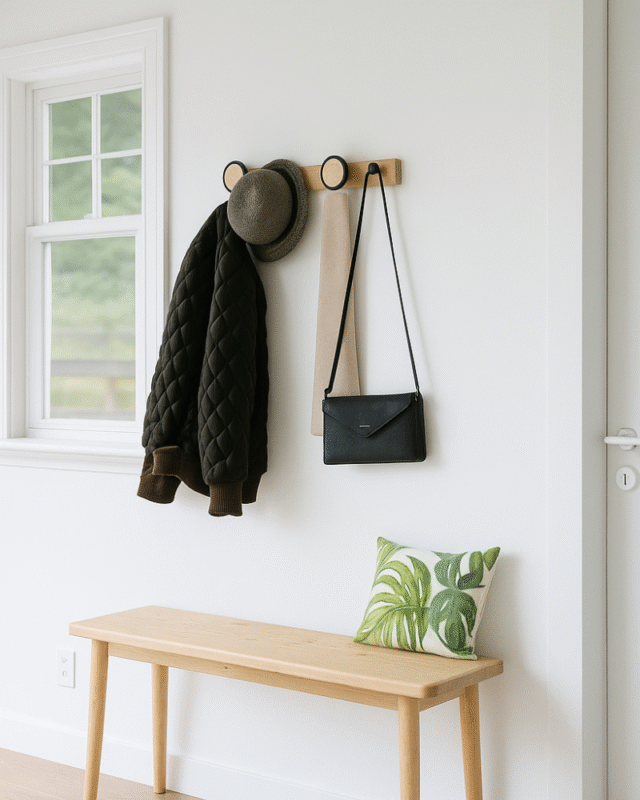
When floor space is limited, use the walls.
Hooks and peg rails are some of the most practical small entryway ideas because they create storage without requiring another piece of furniture.
Install them for jackets, handbags, hats, umbrellas, reusable shopping bags, or dog leashes.
Wooden peg rails work beautifully in Scandinavian and organic interiors, while matte black, brass, or simple metal hooks can suit more modern spaces.
Think about height too.
If children use the entryway, installing a few hooks lower on the wall gives them somewhere accessible to hang school bags and jackets.
You can also position hooks above a bench or shoe cabinet to create one complete storage zone.
The important thing is not to overload them.
A row of hooks covered with coats and bags can quickly become visual clutter. Keep only the items you use regularly near the front door and store the rest elsewhere.
15. Finish With a Clean, Uncluttered Entryway Setup
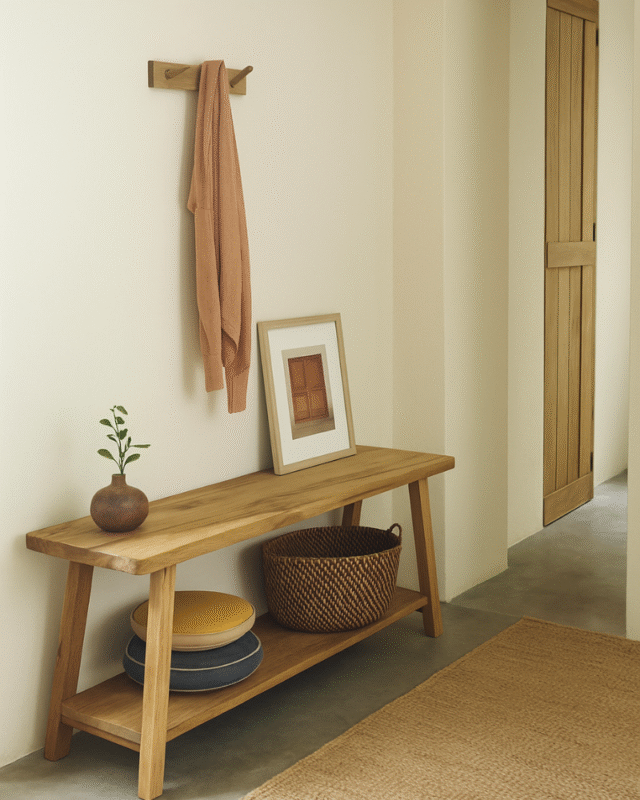
The final layer of a welcoming entryway is not another piece of decor. It is making sure everything already in the space has a purpose.
Start by identifying the items that naturally collect near your front door: shoes, keys, bags, mail, coats, umbrellas, or pet accessories.
Then give each one a designated home.
Shoes may go in baskets or a slim cabinet. Keys can live in a small tray. Bags and jackets can go on hooks. Mail should have a drawer or organizer rather than remaining on top of the console.
Once those practical needs are handled, keep the visible surfaces relatively clear.
A lamp, vase, plant, candle, or decorative bowl may be all you need.
Try doing a quick entryway reset regularly rather than waiting until clutter becomes overwhelming.
A tidy entrance does not have to look empty. It simply allows the furniture, textures, lighting, and decorative details you intentionally chose to actually stand out.
Frequently Asked Questions
How can I make my entryway feel cozy?
Start with warm lighting, a rug or runner, and natural textures. Wood furniture, woven baskets, linen or wool textiles, greenery, and warm neutral colors can make an entrance feel softer without requiring lots of decorative accessories. Focus on two or three cozy elements rather than layering everything into the same small space.
What should I put in a small entryway?
Choose items that provide more than one function whenever possible. A storage bench offers seating and shoe storage, while a slim cabinet provides hidden storage and a surface for keys. Mirrors, wall hooks, peg rails, and floating shelves are particularly helpful because they make use of vertical wall space.
What can I use instead of a console table in a narrow entryway?
A floating shelf or narrow wall-mounted ledge can create a drop zone without taking up much floor space. Pair it with a mirror above and hooks nearby for bags or coats. If there is very little wall depth available, a mirror and attractive hooks may be enough.
How do you keep an entryway from looking cluttered?
Give frequently used items a specific home and remove anything that does not need to stay near the front door. Use closed storage for visually messy items, baskets for everyday essentials, hooks for bags and coats, and a tray for small objects such as keys. Keep decorative surfaces partially empty rather than filling every available spot.
What colors make an entryway feel warm and welcoming?
Warm whites, creams, taupe, beige, muted olive, earthy greens, clay tones, natural wood, and soft charcoal can all work well. You can also use darker shades such as navy or deep green on an accent wall, particularly when balanced with warm wood, lighter textiles, and good lighting.
How do you decorate an entryway when you do not have a foyer?
Create the feeling of a separate entrance by defining one section of the wall or floor. A small rug, floating shelf, bench, mirror, or row of hooks can establish an entry zone even when the front door opens directly into a living room. Keep the furniture proportional so that it does not interrupt the flow into the rest of the home.
Final Thoughts
The best cozy entryway ideas are not necessarily the ones with the most decor.
A welcoming entrance starts with making the space work for everyday life. Choose a bench or console that fits properly, create storage for the things that normally collect near the door, improve the lighting, and then introduce a few textures and decorative pieces that make the space feel like part of your home.
For a smaller entrance, focus on vertical storage, shallow furniture, mirrors, and a simple color palette rather than trying to fit every traditional foyer feature into the space.
Once the practical problems are solved, you often need very little else.
A rug, warm lighting, natural materials, greenery, and one strong focal point can transform even a small entryway into a welcoming and organized first impression.