What Is a Pocket Door? 8 Space-Saving Uses, Benefits and Drawbacks
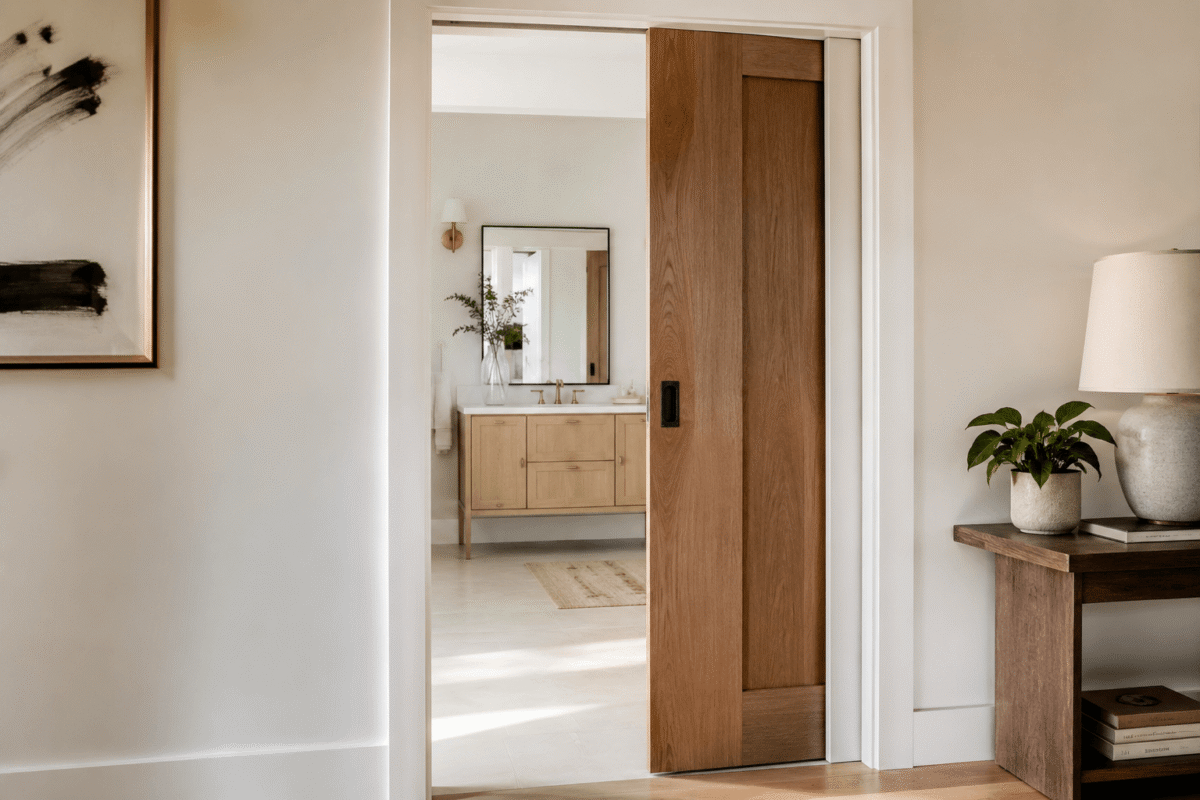
A pocket door can be an effective solution when a traditional swinging door takes up too much space. Instead of opening into a room, the door slides horizontally into a concealed compartment inside the adjoining wall.
When fully open, a pocket door almost disappears, leaving the doorway clear and making the surrounding area easier to use. This makes pocket doors particularly helpful in small bathrooms, laundry rooms, pantries, walk-in closets, and other compact spaces.
However, a pocket door is not suitable for every room or wall. Before installing one, it is important to understand how it works, where it performs best, and what construction requirements are involved.
What Is a Pocket Door?
A pocket door is a sliding door that retracts into a cavity, or “pocket,” built inside the wall.
Most pocket doors hang from a track installed above the doorway. When the door is opened, it glides along the track and disappears inside the wall rather than swinging into the room.
Pocket doors are available in several materials and finishes, including:
- Solid wood
- Engineered wood or MDF
- Frosted or ribbed glass
- Metal-framed glass
- Mirrored panels
- Paint-matched doors
- Decorative paneled doors
A single pocket door retracts into one side of the wall. Double pocket doors meet in the middle and slide into cavities on opposite sides of a wider opening.
Pocket Door vs. Barn Door: What Is the Difference?
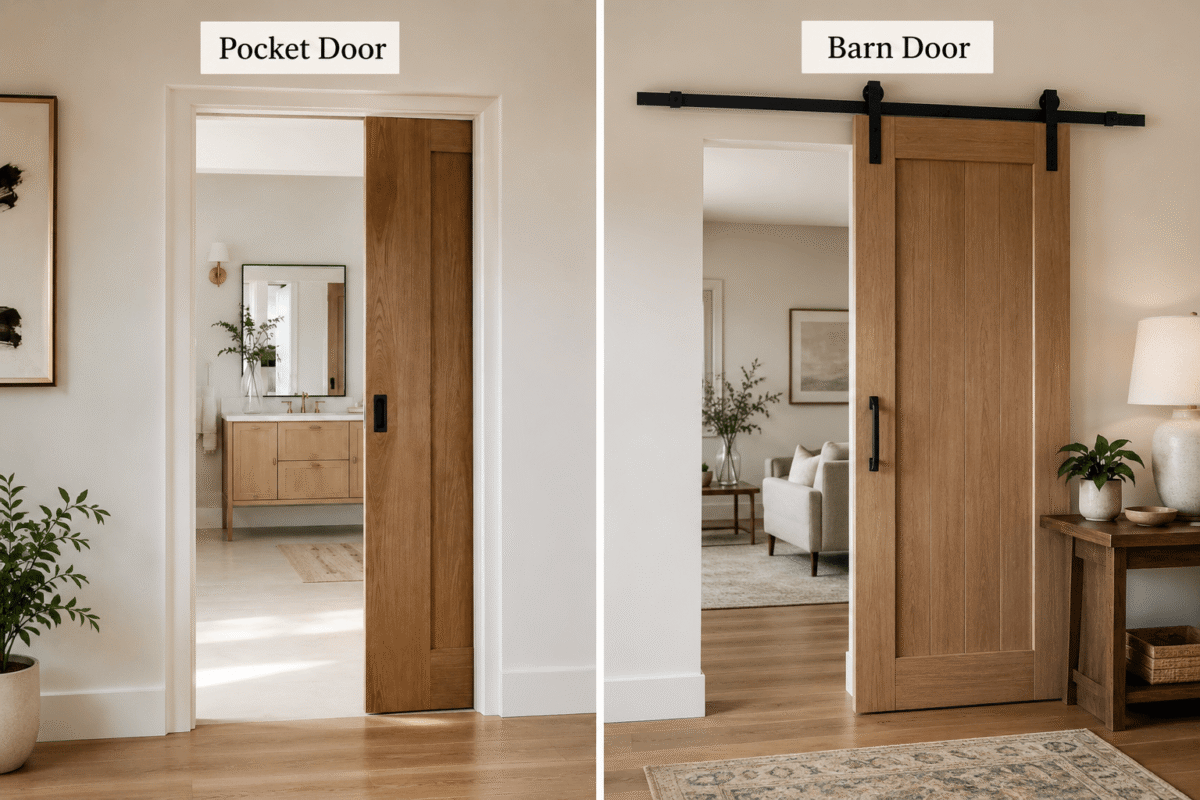
Pocket doors and barn doors both slide horizontally, but they use different installation systems.
A pocket door slides inside the wall and becomes almost completely hidden when open. Its track and most of its hardware are concealed.
A barn door slides along the outside of the wall on a visible track. The door remains in view even when it is fully open.
Because a barn door moves across the wall surface, the area beside the doorway must remain clear. You may not be able to place artwork, shelves, switches, or furniture in the path of the door.
A pocket door allows you to use more of the surrounding wall, but it is generally more complicated to install because the wall must contain a suitable cavity.
Pocket Door Benefits and Drawbacks
Benefits of pocket doors
A pocket door can:
- Eliminate the floor space required for a door swing
- Improve movement through narrow rooms and hallways
- Make furniture placement easier
- Create flexible separation between adjoining rooms
- Keep entrances clear when the door is open
- Give a room a streamlined, uncluttered appearance
- Work as either a single or double-door system
Drawbacks of pocket doors
A pocket door may:
- Cost more to install than a standard hinged door
- Require part of the wall to be opened and reconstructed
- Conflict with plumbing, wiring or structural supports
- Provide less sound control than a well-sealed hinged door
- Require specialist locks and recessed handles
- Be difficult to repair if internal hardware becomes damaged
- Rattle, stick or come out of alignment when poor-quality hardware is used
The right choice depends on your room layout, privacy requirements, available wall space and renovation budget.
8 Best Places to Use a Pocket Door
1. Save Space in a Small Bathroom
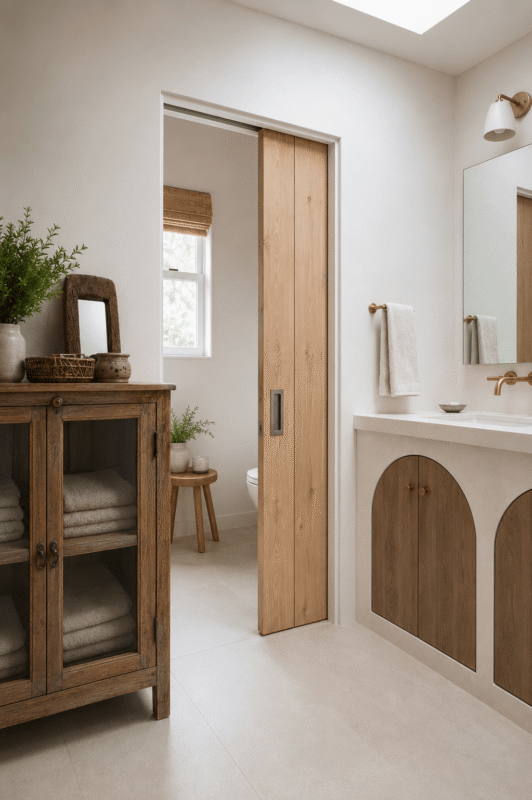
A small bathroom is one of the most practical places to install a pocket door.
A traditional door may swing into the bathroom and interfere with the vanity, toilet, storage cabinet or shower entrance. It may also open outward into a narrow hallway.
A bathroom pocket door removes this swing area, leaving more usable space around the entrance. It can be especially helpful in:
- Powder rooms
- Compact ensuite bathrooms
- Narrow bathroom layouts
- Bathrooms with limited clearance around fixtures
For greater privacy, choose a solid door with an appropriate pocket-door lock. Frosted or ribbed glass can allow light to pass through, but it may not provide the same visual privacy as a solid panel.
A standard pocket door may also allow more sound to travel through the gaps around the panel than a properly sealed hinged door. Consider a solid-core door or an acoustic system when noise control is important.
2. Conceal a Laundry Area
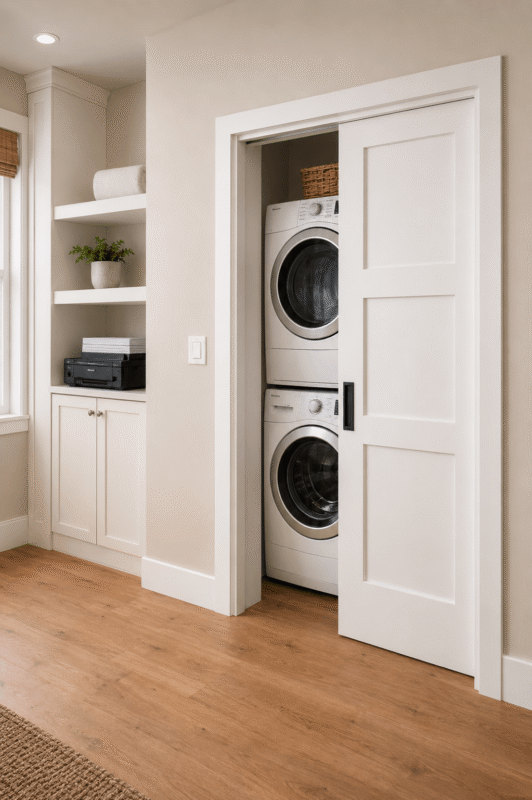
Laundry spaces are often located inside kitchens, hallways, bathrooms, or other compact areas where a swinging door can obstruct movement.
A pocket door can conceal the washer, dryer, cleaning products and laundry baskets when the area is not in use. When opened, it leaves the entrance clear, making it easier to load appliances and carry baskets in and out.
A single pocket door works well for a narrow laundry room. Double pocket doors may be more suitable for a wide laundry closet containing side-by-side appliances.
Choose a finish that coordinates with nearby walls, cabinets or paneling so the laundry area feels integrated with the rest of the room.
3. Create Flexible Privacy for a Home Office
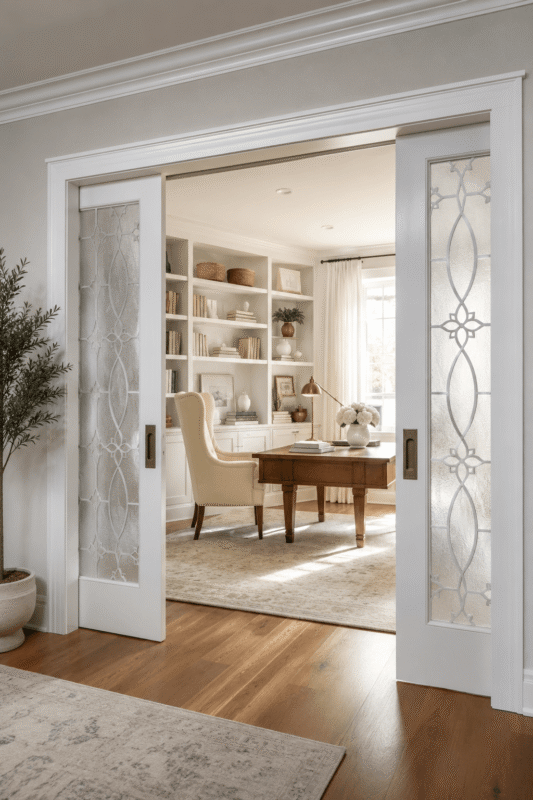
Many homes use one room for several purposes. A guest bedroom, dining room, or living area may also function as a home office.
A pocket door allows the workspace to remain open during normal use and close when privacy is needed for meetings or focused work. When open, the door does not occupy valuable wall or floor space.
A frosted or ribbed glass pocket door can help natural light reach the office while reducing visual distractions. A solid-core door may reduce noise better than a lightweight hollow door, although a standard pocket door should not be considered soundproof.
This option works particularly well for:
- Guest room offices
- Small studies
- Multipurpose rooms
- Workspaces next to living areas
4. Connect a Bedroom and Ensuite Bathroom
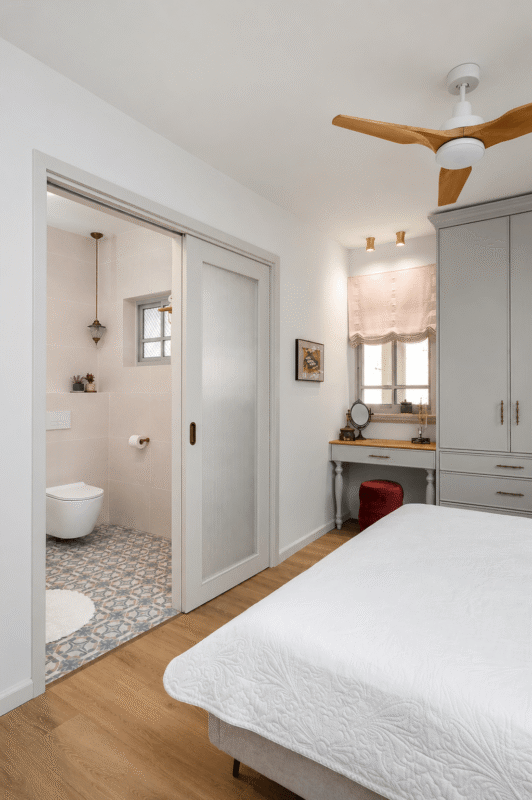
A hinged door between a bedroom and ensuite can interfere with furniture placement or make the bathroom entrance feel cramped.
A pocket door creates a cleaner transition between the two rooms. It can remain open during the day and slide closed when privacy is needed.
Choose a finish that works with both spaces. Natural wood can complement bedroom furniture, while a painted door can blend into the wall for a more understated appearance.
Before installation, check whether the wall contains plumbing, wiring, switches or outlets. Walls surrounding an ensuite often contain services that may need to be relocated.
5. Hide a Walk-In Pantry or Prep Kitchen
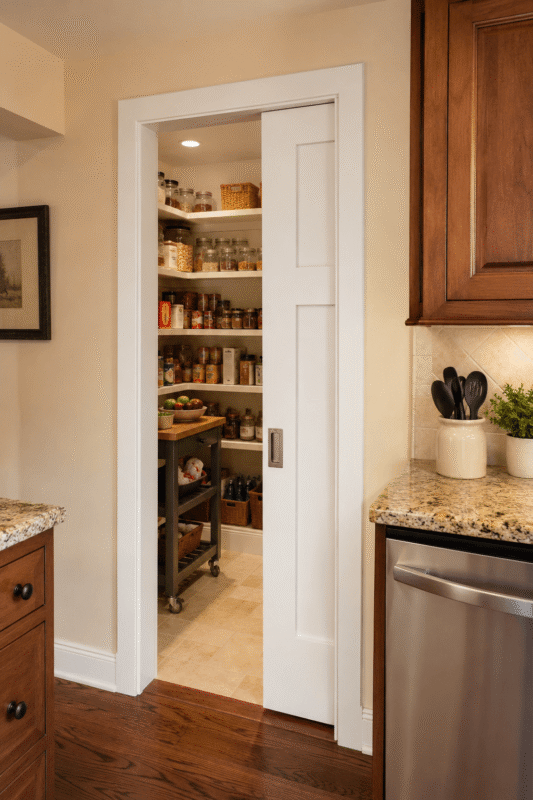
A pocket door is a practical choice for a walk-in pantry, butler’s pantry or secondary preparation kitchen.
Unlike a hinged door, it does not swing into shelves, countertops or busy kitchen walkways. It can remain open while groceries are being stored or meals are being prepared, then close to conceal food packaging, small appliances and kitchen clutter.
For a cohesive design, match the door to the kitchen cabinetry or wall paneling. A glass-paneled pocket door can make the entrance feel lighter, while a solid panel completely hides the pantry interior.
Double pocket doors can provide a wider entrance for a large pantry or prep kitchen without requiring additional floor clearance.
6. Improve Access to a Walk-In Closet
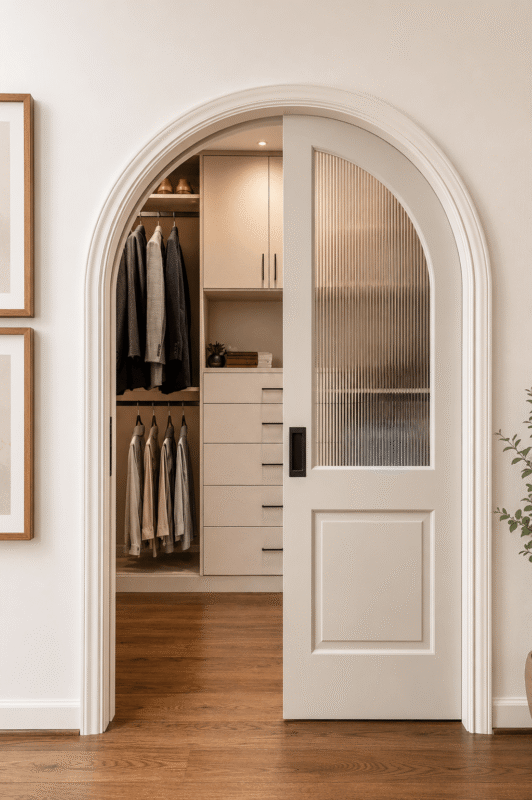
A hinged walk-in closet door may compete with the bed, nightstand, dresser or other bedroom furniture. Inside the closet, it may also interfere with drawers, shelves or hanging space.
A pocket door eliminates the swing area and keeps the entrance unobstructed.
A mirrored pocket door can provide a full-length reflection without taking up additional wall space. However, the door system must be designed to support the added weight of the mirror.
Other suitable finishes include:
- Paint that matches the bedroom wall
- Fluted wood
- Decorative molding
- Natural timber
- Simple flush panels
This application works best at the entrance to a walk-in closet or dressing room rather than as a replacement for ordinary sliding wardrobe panels.
7. Separate Living and Dining Areas
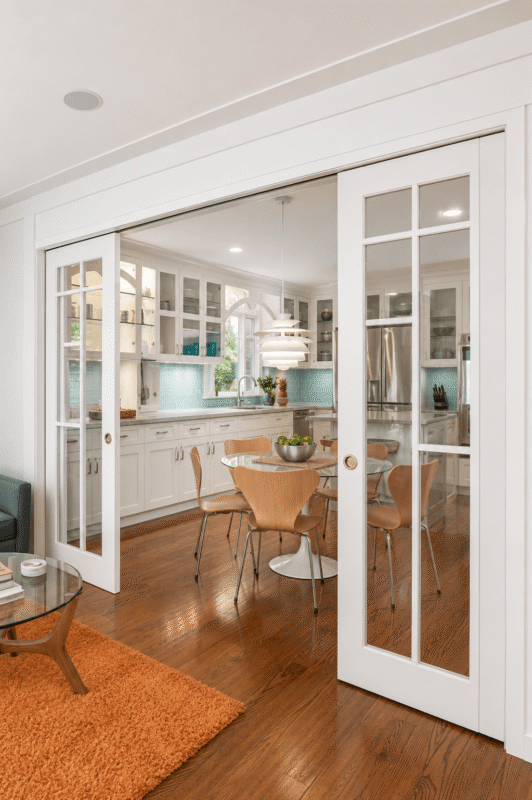
Double pocket doors can provide flexible separation between adjoining living and dining rooms.
When the doors are open, the two spaces feel connected and spacious. When closed, they create separate areas for dining, working, entertaining or relaxing.
Glass-paneled doors allow light to move between the rooms while still creating a physical boundary. Solid doors provide more visual privacy and help each room feel more defined.
This type of installation requires enough uninterrupted wall space on both sides of the opening to accommodate the two door panels.
Double pocket doors are particularly suitable for:
- Living and dining rooms
- Formal sitting areas
- Libraries connected to living rooms
- Flexible open-plan interiors
8. Separate a Mudroom from the Main Living Area
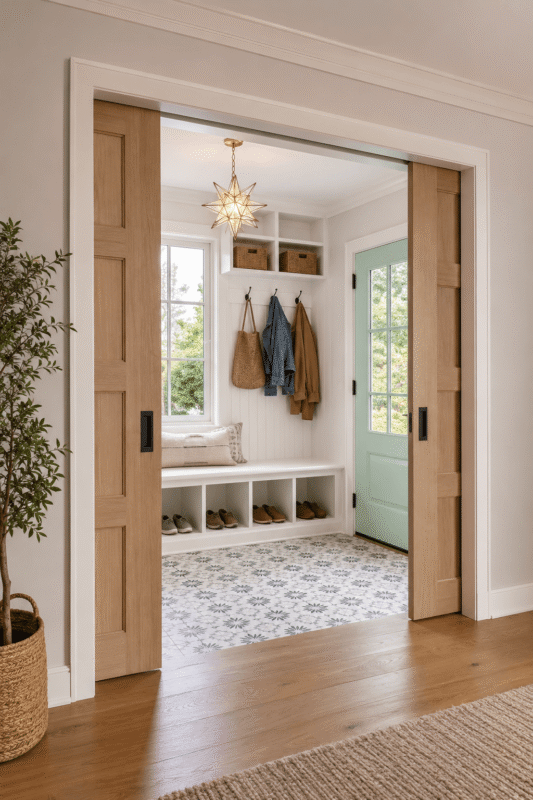
Mudrooms can quickly become cluttered with shoes, bags, coats, umbrellas and outdoor equipment.
A pocket door allows you to close off the mudroom without adding another swinging door to a busy entrance, kitchen or hallway. When opened, it leaves the walkway clear for people carrying shopping bags, laundry or other items.
Choose a durable, easy-to-clean finish because mudrooms are frequently exposed to dirt and moisture. Suitable options include sealed wood, painted composite materials and moisture-resistant paneled doors.
A pocket door can hide visual clutter, but a standard system may not completely block drafts, odors or noise.
What to Consider Before Pocket Door Installation
Pocket door installation is usually easier during a renovation or new construction project because the inside of the wall must be accessible.
Before proceeding, consider the following factors.
Available wall space
The wall beside the doorway must be long enough to accommodate the full width of the door panel.
For example, a door that is approximately 32 inches wide generally requires a similar amount of unobstructed wall space beside the opening. The exact dimensions will depend on the frame and hardware system selected.
An adjoining doorway, built-in cabinet or short wall section may prevent the door from retracting completely.
Plumbing and electrical services
Pipes, wiring, electrical outlets and light switches cannot normally remain in the section of wall occupied by the pocket-door frame.
This is particularly important in bathrooms, kitchens, laundry rooms and ensuite walls, where plumbing and electrical services are common.
A contractor should inspect the wall before installation begins.
Structural requirements
A pocket door may sometimes be installed in a load-bearing wall, but the opening and structural support may need to be redesigned.
Do not remove wall studs or alter a load-bearing wall without guidance from a qualified contractor, architect or structural professional.
Door and hardware quality
Low-quality tracks and rollers can cause a pocket door to stick, rattle or become misaligned.
Choose hardware that can support the weight of the selected door panel. Soft-close mechanisms can also make the door quieter and prevent it from slamming.
Important hardware includes:
- A durable overhead track
- Weight-rated rollers
- A stable floor guide
- Recessed handles
- A suitable privacy or keyed lock
- Soft-close fittings where required
Privacy and sound control
Pocket doors provide visual separation, but an ordinary system may not block sound as effectively as a properly sealed hinged door.
For bathrooms, bedrooms and home offices, consider using:
- A solid-core door
- High-quality perimeter seals
- A fitted bottom seal
- An acoustic pocket-door system
Avoid claiming that a standard pocket door is completely soundproof.
Maintenance access
Some modern systems allow the track, rollers and door panel to be accessed from the doorway. More serious problems inside the frame, however, may require part of the wall to be opened.
Investing in durable hardware during installation can reduce the risk of future repairs.
When Should You Avoid a Pocket Door?
A pocket door may not be the best solution when:
- The wall does not have enough uninterrupted cavity space.
- Plumbing, ductwork or electrical services cannot be moved.
- Strong soundproofing is essential.
- The doorway needs a tight seal against odors, moisture or drafts.
- Structural supports cannot be modified safely.
- You need a simple and inexpensive door replacement.
- Regular access to the inside of the wall may be necessary.
In these situations, a hinged door, bifold door or surface-mounted sliding door may be more practical.
Frequently Asked Questions About Pocket Doors
Are pocket doors suitable for bathrooms?
Yes. Pocket doors are useful in small bathrooms because they eliminate the swing area of a traditional door. Choose a solid panel, suitable privacy lock and quality hardware. Consider an acoustic system when sound privacy is important.
Can a pocket door be installed in an existing wall?
It may be possible, but the wall must be opened so the pocket-door frame can be installed. Plumbing, wiring, ductwork and structural elements must be checked before construction begins.
Can pocket doors be locked?
Yes. Pocket-door privacy locks and keyed locks are available. The handles and locking hardware are recessed so the door can slide into the wall cavity.
Are pocket doors soundproof?
Standard pocket doors are not soundproof. A solid-core panel, perimeter seals and an acoustic pocket-door system can improve sound reduction.
Are pocket doors more expensive than regular doors?
They are generally more expensive to install because the wall may need to be opened, modified and refinished. The final cost depends on the door material, hardware, labor and any electrical, plumbing or structural work required.
Do pocket doors need a bottom track?
Most residential pocket doors hang from an overhead track and use a small floor guide to keep the panel aligned. They do not usually require a full track across the floor.
Are Pocket Doors Worth It?
A pocket door can be worth installing when it solves a genuine layout problem. It is especially valuable in rooms where a traditional door would block furniture, restrict movement or take up limited floor space.
Pocket doors work particularly well in small bathrooms, laundry areas, home offices, bedroom suites, pantries, walk-in closets, mudrooms and adjoining living spaces.
The key is to confirm that the wall can accommodate the system, select durable hardware and consider privacy requirements before installation begins. With proper planning, a pocket door can become a practical and understated feature that improves the way your home functions.